10 Tips for Cutting Toenails When You Can’t Reach
When cutting your toenails becomes challenging due to limited reach, there are practical tips to make the task easier. Start by preparing a comfortable, well-lit space, and consider using long-handled toenail clippers to improve your reach and control. Soaking your feet to soften the nails is another key step. If you still struggle, don't worry; there are additional techniques and tools available to ensure your toenails are well-maintained without causing discomfort or injury. Curious about the next steps?
Prepare Your Space
Creating an ideal space for cutting your toenails is essential for both comfort and precision. Start by choosing a comfortable seating area that offers easy access to your feet. A sturdy coffee table or heavy pouf can provide the stability needed to trim your toenails effectively. Ensure the area is well-lit to enhance visibility and avoid mishaps.
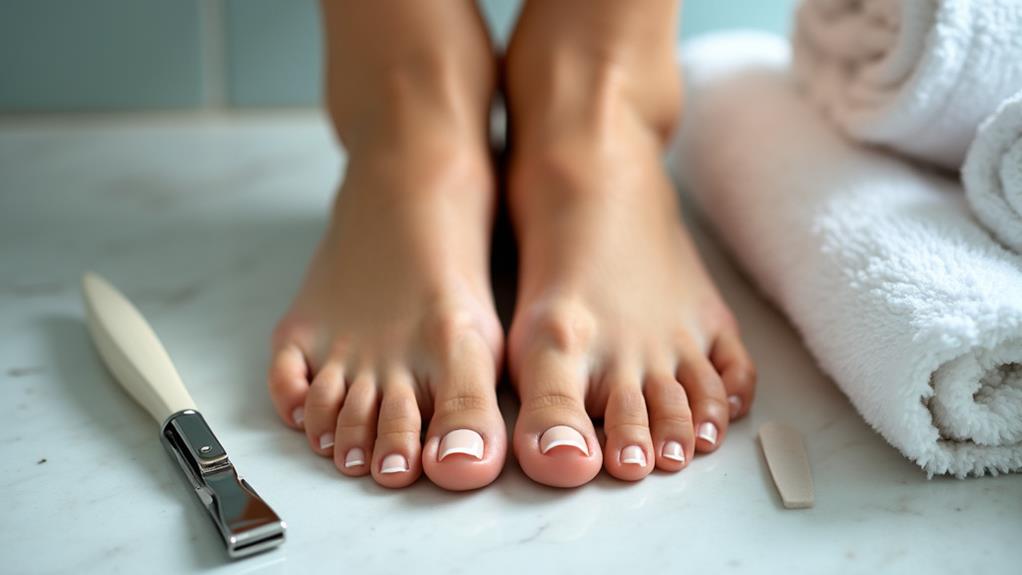
Lay out towels to protect surfaces from any water or debris that may occur during the process, saving you from unnecessary cleanup later. If you're pregnant or have trouble bending, consider sitting cross-legged to bring your feet closer, making it easier to reach and trim your toenails without straining yourself.
Before you start, practice reaching toward your feet to assess your comfort and mobility. This pre-check ensures you're in the best possible position to tackle the task smoothly. By taking these steps to prepare your space, you'll make the process of trimming your toenails much more manageable and efficient.
Use Proper Tools
Choosing the right tools for cutting your toenails is crucial for achieving a clean, precise cut. Investing in long-handled toenail clippers can be particularly beneficial if you have mobility issues that prevent you from bending or lifting your legs. These clippers are designed to provide easier access to your toenails without causing strain.
When selecting toenail clippers, choose ones with a large opening, around 4MM, to accommodate thicker toenails—a common issue as we age. Ensure the clippers are made from durable materials like stainless steel or aluminum to guarantee longevity and ease of maintenance.
Opt for toenail clippers with an ergonomic design that allows for rotation in multiple directions, offering flexibility and ease of use for both right-handed and left-handed individuals. Sharpness is another crucial factor; dull clippers can result in jagged cuts and increase the risk of nail damage. Always verify that your clippers are sharp and in good condition before using them.
Smooth Rough Skin
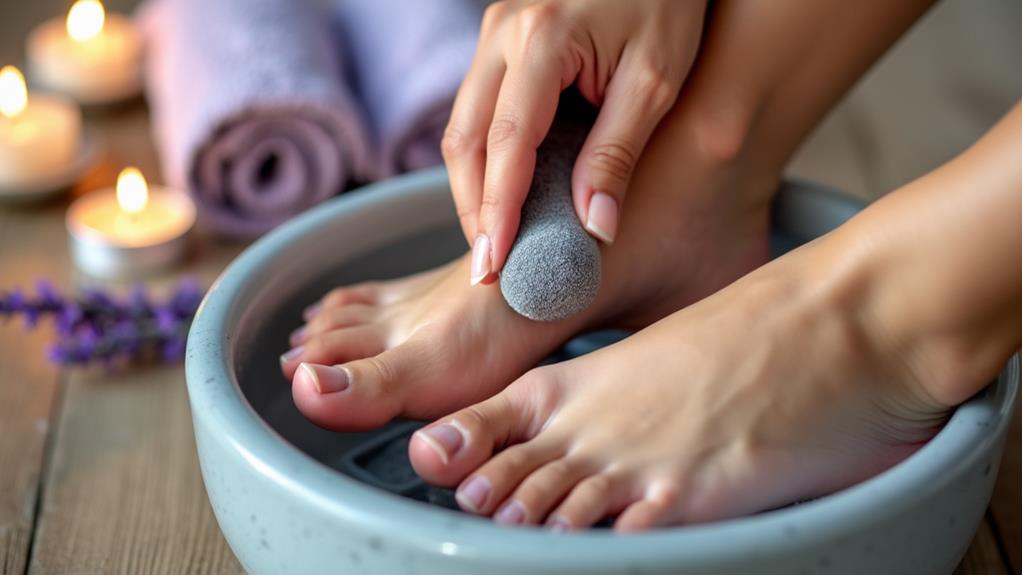
Aging often leads to drier skin on the feet due to reduced sweat gland activity, making it essential to regularly smooth rough skin for comfort and health. This not only improves overall foot health but also facilitates easier and more effective toenail trimming. Here are some steps to help you manage rough skin:
- Use a foot file or pumice stone: Before soaking, gently remove calluses and rough patches, focusing on areas like your heels and the balls of your feet. Avoid overdoing it to prevent skin irritation.
- Prevent buildup: Regularly filing and smoothing rough skin prevents accumulation, reducing the risk of infections or painful cracks and maintaining better foot condition for toenail trimming.
- Incorporate skin-softening products: Using skin-softening bath products like Epsom salts can enhance the effectiveness of your routine, making it easier to manage rough skin.
Soak Your Feet
Soak your feet in comfortably warm water for 5-15 minutes to soften thick nails, making them easier to cut. Adding Epsom salts can enhance relaxation and improve nail pliability.
Water Temperature Matters
Soaking your feet in warm water before cutting your toenails can make the task much easier by softening thick nails. This reduces the need for excessive force and is especially helpful for those with limited mobility.
Follow these steps for an effective foot soak:
- Check the Water Temperature: Ensure the water is comfortably warm, ideally between 95-105°F (35-40°C). This range effectively softens nails without causing discomfort.
- Soak Duration: Submerge your feet for 5-15 minutes to relax them and make your toenails easier to cut.
- Comfortable Setup: Use a basin or foot spa and ensure you're seated comfortably to avoid strain.
Use Epsom Salts
After ensuring the water temperature is just right, enhancing your foot soak with Epsom salts can elevate your nail care routine. Soaking your feet in warm water mixed with Epsom salts for 10-15 minutes softens thick toenails, making them easier to trim. This step is especially beneficial if you have mobility issues that make reaching your toenails challenging.
Epsom salts not only soften nails but also provide a relaxing experience and alleviate foot pain. The magnesium sulfate in Epsom salts improves circulation in your feet, contributing to healthier nail growth over time.
Dry Thoroughly
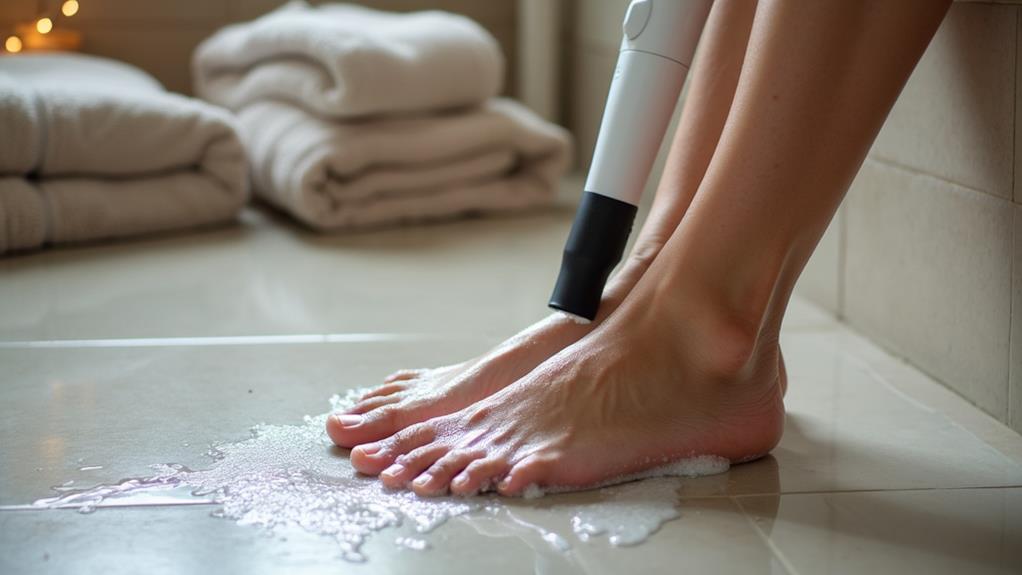
Thoroughly drying your feet is an essential part of toenail care. Proper drying prevents infections like athlete's foot and prepares your toenails for clipping. After washing, ensure every part of your feet, especially between the toes, is dry to prevent moisture buildup. Follow this guide:
- Pat Dry: Use a soft towel to gently pat your feet dry. Avoid excessive rubbing to prevent skin irritation, especially if your skin is sensitive.
- Use Drying Tools: Consider tools like a Long Handle Toe Towel or a Long Handle Toe Washer to reach and dry difficult areas, ensuring optimal hygiene.
- Inspect Between Toes: Pay close attention to drying between your toes, as moisture can get trapped and cause fungal infections. Make sure these areas are completely dry before clipping your toenails.
Trim Straight Across
Trimming your toenails straight across is crucial for maintaining nail health and preventing painful ingrown nails. Cutting straight across reduces the risk of the nail edges growing into your skin, which can lead to discomfort and potential infections. Aim to leave a small portion, about 1/32 inch, of the nail extending past the nail bed. This ensures proper nail growth and avoids skin irritation.
Cutting toenails straight also promotes forward nail growth, important for healthy nail structure, especially as you age. Regularly trimming your nails every six to eight weeks is advisable, particularly if you have mobility challenges. This routine helps you maintain the ideal nail length and prevent issues associated with overly long nails.
Here's a quick guide to remember:
| Step | Importance |
|---|---|
| Cut straight across | Prevents ingrown toenails and promotes nail health |
| Leave 1/32 inch length | Ensures proper growth and avoids skin irritation |
| Trim every 6-8 weeks | Maintains ideal length and overall nail health |
File and Shape
Filing and shaping your toenails is essential for maintaining nail health and preventing snags. Use an emery board or a nail file specifically designed for thicker toenails to achieve a smooth edge and avoid rough spots that could catch on socks or shoes. Always file in one direction rather than back and forth to reduce the risk of splitting and damaging the nails.
After shaping the main body of the toenail, focus on the corners. Gently file them to create a slight roundness, which improves appearance and reduces the risk of ingrown toenails. Consistency is key; regularly smoothing jagged edges can prevent discomfort or injury from sharp corners.
To enhance the filing process:
- Soak your feet in warm water to soften the nails.
- Use a nail file designed for thick toenails for a smoother finish.
- File in one direction to avoid splitting the nail.
Moisturize Feet
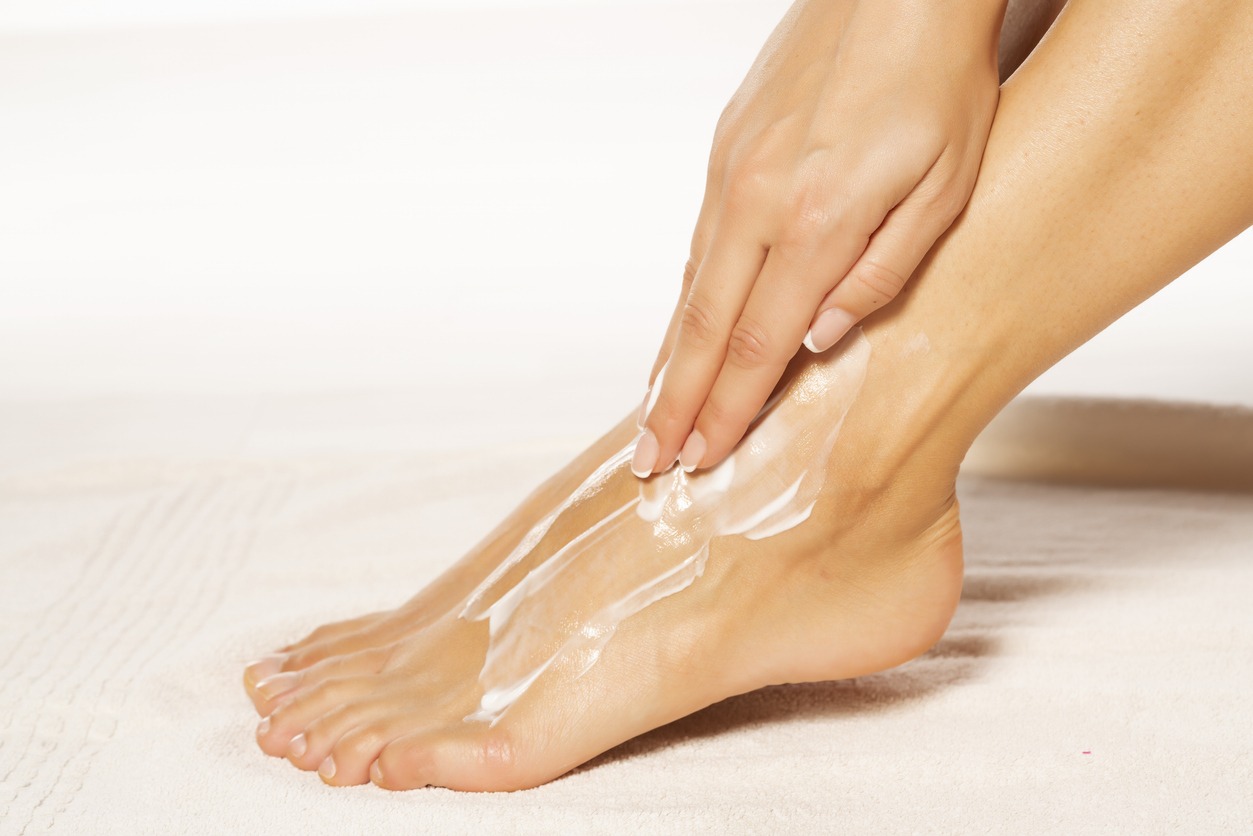
To maintain healthy toenails and feet, moisturize daily, paying special attention to areas like heels and calluses. Use a thick moisturizer or foot cream with urea or salicylic acid for optimal results. Apply it before bedtime and wear cotton socks overnight to enhance absorption and effectiveness.
Choose Appropriate Moisturizer
Choosing the right moisturizer is vital for maintaining healthy feet and making toenail care easier. Opt for a moisturizer specifically designed for feet, as these products often contain higher concentrations of urea or other humectants to effectively hydrate thick and dry skin. For maximum benefits, apply the moisturizer immediately after soaking or bathing to lock in moisture. Using it on slightly damp skin enhances absorption.
Here are three tips to help you choose the best moisturizer for your feet:
- Select Rich Ingredients: Look for moisturizers with shea butter, coconut oil, or olive oil. These ingredients provide deep hydration and can help soften thick toenails, making them easier to clip.
- Consider Antifungal Properties: If you're prone to infections, choose a foot cream with antifungal properties. Healthy, moisturized skin is less susceptible to fungal growth, keeping your feet in top condition.
- Prioritize Comfort: Regularly moisturizing your feet improves skin texture and boosts comfort and mobility, making toenail care more manageable, even if you have limited reach.
Apply Daily for Benefits
Applying a daily moisturizer to your feet is crucial for preventing dryness and cracking, which helps maintain nail health as skin elasticity decreases with time. Incorporating moisturizing into your routine not only cares for your skin but also makes it easier to manage your toenails. Look for foot creams containing ingredients like urea or salicylic acid, which effectively soften thickened skin, making toenail trimming simpler.
Regular moisturizing can improve circulation in your feet, especially beneficial if you have limited mobility. Enhanced circulation can make nail care more manageable and reduce the risk of complications like infections. For best results, apply a foot moisturizer right after soaking your feet. This practice locks in moisture, ensuring your toenails remain softer and easier to clip during your next grooming session.
Establishing a daily moisturizing routine is essential for complete foot health. Consistent care reduces the likelihood of cracking, dryness, and other issues that can complicate nail maintenance. By making moisturizing a daily habit, you are promoting healthier, more manageable toenails, thus simplifying your grooming process significantly.
Focus on Problem Areas
When moisturizing your feet, pay special attention to problem areas like rough heels and calluses for optimal results. Regularly moisturizing helps prevent dry, cracked skin and facilitates easier nail trimming. By focusing on these tough spots, you'll enhance overall foot health and comfort.
Follow these three essential steps:
- Choose the Right Products: Opt for creams with ingredients like urea or lactic acid, which effectively soften thickened skin and nails, making them easier to trim.
- Incorporate Daily Care: Make moisturizing a daily habit to maintain skin hydration and prevent the buildup of dead skin, which can obstruct nail care.
- Moisturize Between Toes: Moisturizing between your toes helps prevent fungal infections, which can complicate toenail care and overall foot health.
Seek Assistance
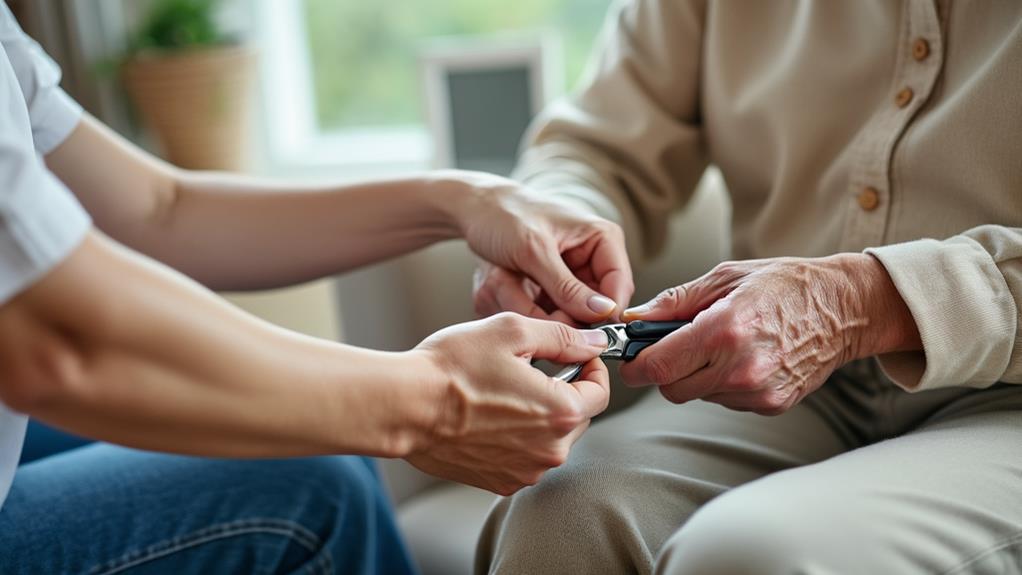
If you find it difficult to reach your toenails, seeking assistance can ensure safe and accurate trimming. A family member or friend can help with the process, reducing the risk of injury. Visiting a nail salon is another excellent option, as professional pedicurists are trained in toenail care and can handle your needs with precision and care.
Community centers and senior activity programs often offer foot care services with trained volunteers who can assist with toenail maintenance. This offers a practical solution for those who can't manage it themselves. Additionally, telehealth services can provide guidance and tips for safe toenail care through virtual consultations if in-person help isn't available.
Investing in long-handled toenail clippers can also be beneficial. These tools are designed for greater accessibility and can make it easier to maintain your toenail health independently. By seeking assistance and utilizing the right tools and services, you can ensure your toenails are properly cared for without the strain of reaching.
Consider Professional Help
Seeking professional help for toenail care can make a significant difference, especially for those with mobility issues or thick toenails. Professional podiatrists are trained to handle nail care, ensuring safe and effective trimming. This is crucial because untreated toenail issues can lead to complications, such as ingrown toenails or infections. If self-care is too difficult, seeking professional help is wise to avoid these problems.
Consider these options for professional help:
- Podiatrist Visits: Podiatrists provide specialized care and are well-equipped to handle complex toenail issues. Note that Medicare and other insurance plans may not cover routine foot care unless specific medical conditions exist, so check with your provider.
- Nail Salons: Regular pedicures at nail salons can be a more cost-effective alternative. Many salons offer senior discounts, making professional care more accessible. Ensure the salon follows proper hygiene practices to prevent infections.
- Home Visits: Some podiatrists and nail technicians offer home visits for those with severe mobility issues. While this service provides necessary care in the comfort of your home, it might come at a higher cost.