10 Ways to Prevent Falls in Elderly Care
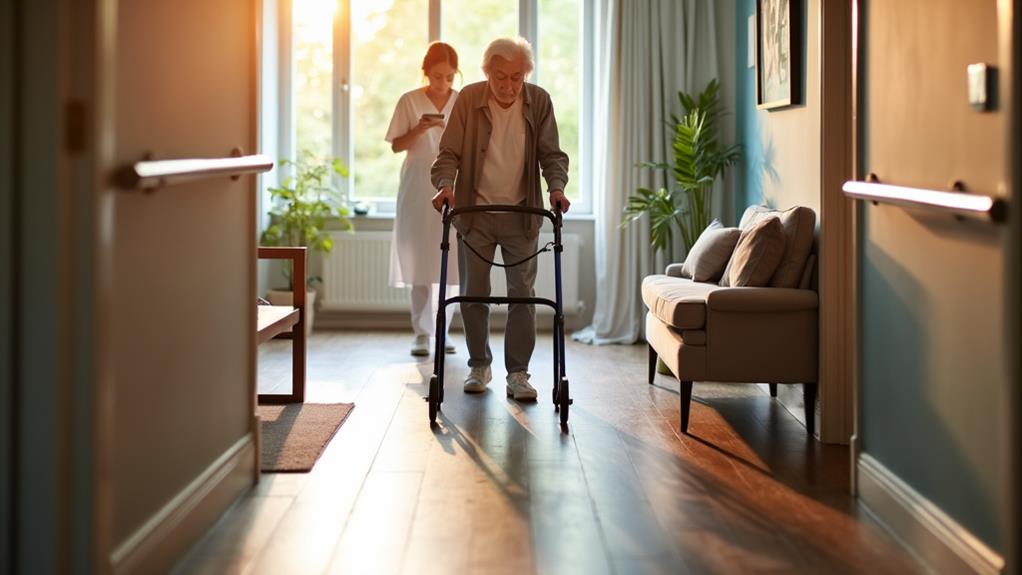
To prevent falls in elderly care, start by consulting health providers to assess fall risk and tailor strategies. Keep medications in check, as they can affect balance. Encourage regular physical activity to increase strength and balance. Opt for sturdy, nonslip footwear. Modify the home to remove hazards and improve lighting for better visibility. Use assistive devices like canes and walkers for extra support. Schedule vision checks to guarantee clear sight. Improve bathroom safety with grab bars and nonskid mats. Maintain outdoor areas to prevent trips. Each step you take brings you closer to a safer environment for your loved one.
Health Provider Consultation
Consulting a health care provider is a crucial step in preventing falls among the elderly. When you schedule an appointment, the provider can assess the individual's risk of falls and create tailored prevention strategies. Start by compiling a thorough list of all medications, including supplements. This helps health care providers identify any side effects that might affect balance and mobility.
Documenting previous falls, including details like circumstances and outcomes, is also vital. This information allows the provider to understand patterns and address specific risk factors. Discussing existing health conditions such as dizziness or joint pain is critical for devising an effective fall prevention plan.
Health care providers will evaluate muscle strength, balance, and gait during the consultation. These assessments enable them to recommend personalized interventions or, if necessary, refer you to a physical therapist. A physical therapist can then design specialized exercise programs to improve strength and balance, further reducing the risk of falls.
Regular Physical Activity
Engaging in regular physical activity is essential for greatly improving strength and balance, thereby reducing the risk of falls among older adults. By incorporating activities like walking, tai chi, and water workouts, you can improve flexibility, coordination, and total mobility. Health care providers recommend at least 150 minutes of moderate-intensity aerobic activity per week for older adults. This not only maintains physical health but also prevents falls.
Participating in monitored exercise programs can help you overcome the fear of falling. These programs provide a supportive environment where you can regain confidence in your physical abilities. They're designed to improve strength and balance, which directly reduces fall risk.
If you have specific needs or conditions, consider getting a referral for physical therapy. Physical therapists can offer personalized exercise programs tailored to your individual requirements. These targeted programs are especially effective in strengthening key muscle groups and improving balance, further decreasing your risk of falls.
Incorporating regular physical activity into your routine is a powerful step towards maintaining independence and safety. So, get moving and stay active to enjoy a healthier, fall-free life!
Sensible Footwear Choices
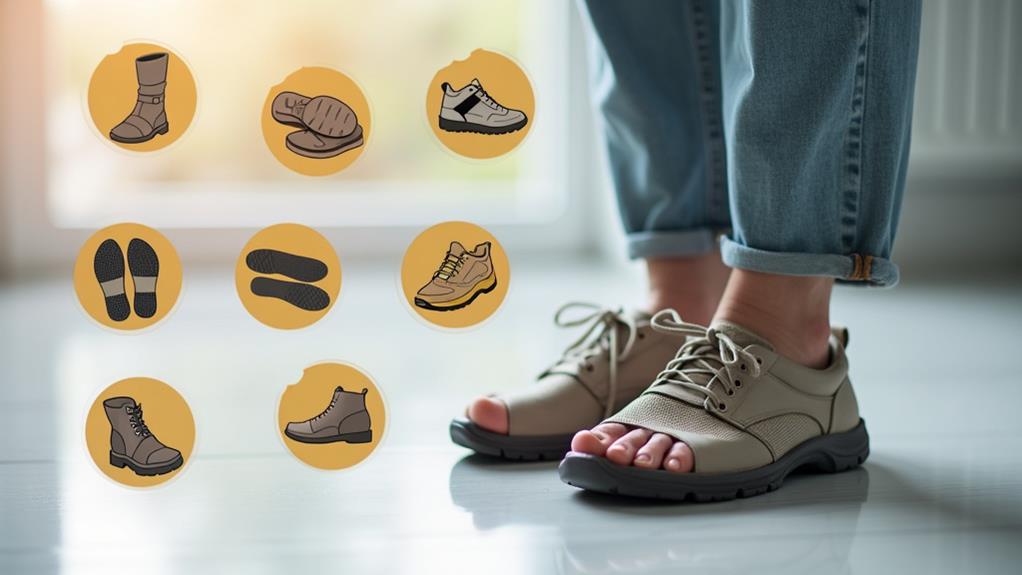
Choosing the right footwear can make a world of difference in preventing falls among older adults. Sensible footwear choices are essential in reducing the risk of falling. Properly fitting, sturdy, flat shoes with nonskid soles provide better support and traction, which markedly helps prevent falls. You should steer clear of high heels, floppy slippers, and slick-soled shoes, as they can increase instability and the likelihood of tripping.
Wearing sensible footwear not only helps prevent falls but can also alleviate joint pain, enhancing general mobility and comfort for older adults. It's vital to regularly assess the condition of your loved one's shoes and replace any worn-out footwear. Worn-out soles can compromise traction and increase the risk of slipping.
Ensuring that shoes are appropriate for both indoor and outdoor environments is another essential aspect. Different surfaces require specific types of traction to minimize slip hazards and support safe navigation. By focusing on sensible footwear choices, you can markedly reduce the risk of falling for older adults and help them maintain their independence and safety. Remember, the right shoes can make all the difference.
Home Safety Modifications
To help prevent falls in elderly care, making home safety modifications is vital. Start by identifying and removing hazards like loose rugs, cords, and clutter. These common risk factors can easily lead to falls, so clearing them out greatly improves safety. Rearrange furniture to create clear pathways in high-traffic areas, ensuring that movement throughout the home is safe and unobstructed.
Securing or eliminating loose rugs is another important step. Loose floorboards or carpeting should be promptly repaired to prevent unexpected trips or falls. You should also consider installing grab bars in bathrooms and incorporating nonslip treads on stairs. These modifications provide extra support and stability, reducing the risk of falls for elderly individuals.
Good lighting plays a key role in home safety modifications. While we'll explore further into adequate lighting later, it's worth noting that night lights in key areas such as hallways and bathrooms can improve visibility and help prevent falls, especially during the night.
Adequate Lighting
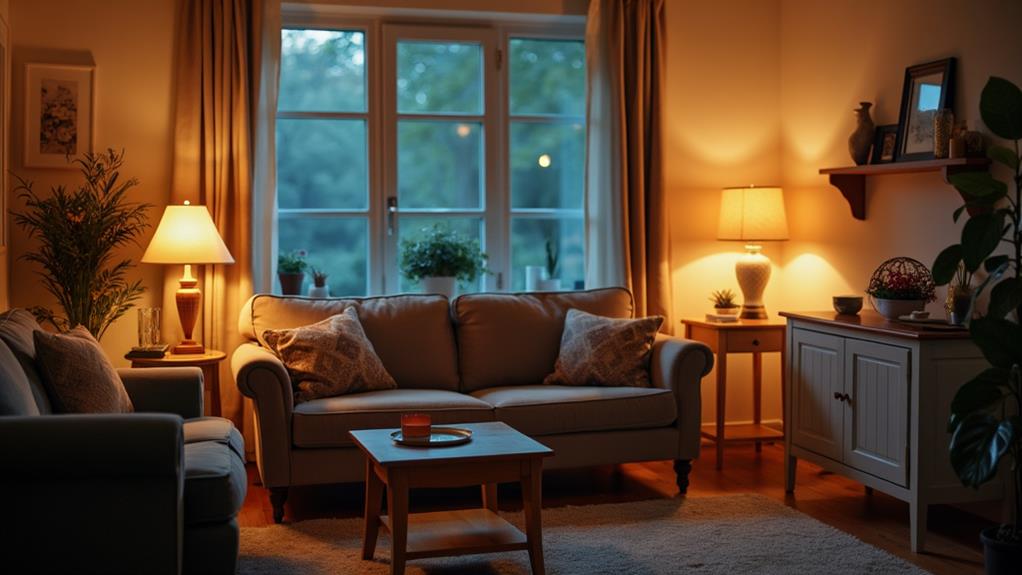
Alongside home safety modifications, guaranteeing adequate lighting is another vital step in preventing falls among the elderly. Adequate lighting can markedly reduce the risk of falls, as dimly lit environments contribute to poor visibility and increased hazards. Start by installing night lights in key areas such as hallways, bathrooms, and bedrooms. These night lights improve nighttime visibility, helping prevent falls during nocturnal movements.
Using bright, adjustable lighting fixtures can boost general illumination in living spaces. This enables older adults to navigate their homes safely. Moreover, make certain light switches are easily accessible and positioned at both ends of stairways. This allows for immediate lighting in potentially hazardous areas, further preventing falls.
Regularly replacing burnt-out bulbs is a simple but vital step. Also, using nonslip treads on stairs can complement lighting improvements, creating a safer environment for older adults. By focusing on these elements, you guarantee that the living spaces are well-lit, reducing the risk of falls and promoting a safer environment for elderly individuals. Adequate lighting is fundamental in maintaining their independence and well-being, making it a key aspect of elderly care.
Assistive Devices
Assistive devices play a vital role in improving stability and mobility for elderly individuals, greatly reducing the risk of falls in their daily activities. Canes, walkers, and grab bars are some of the most effective tools you can use for falls prevention. A cane can provide extra support, improve balance, and distribute weight more evenly, making it easier for your loved one to move around safely.
Walkers offer an even larger base of support, and research indicates that they can reduce fall rates by up to 50% among older adults with mobility issues. Installing grab bars in key areas like bathrooms and near stairways can also provide key support. These bars help individuals get up and down more easily, preventing slips and falls in high-risk zones.
For maximum safety, it is important to consult with an occupational therapist. They can assess and fit the right assistive devices tailored to your loved one's specific needs. Proper assessment and fitting guarantee that the chosen device not only improves mobility but also provides the best possible support. By incorporating these assistive devices, you can greatly contribute to falls prevention and enhance the total quality of life for elderly individuals.
Medication Review
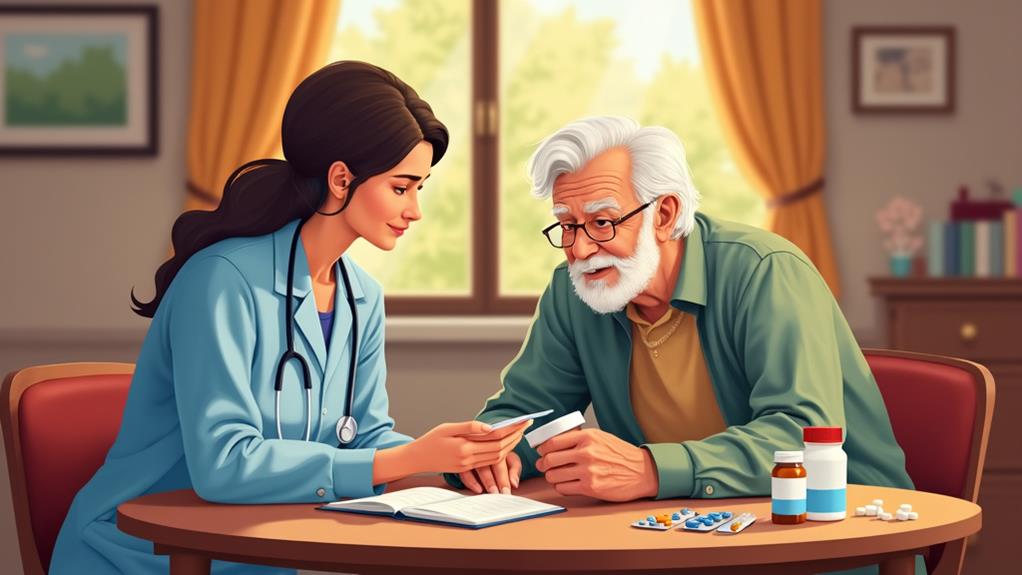
Why is a thorough medication review vital for fall prevention in elderly care? A detailed medication review is important because using five or more medications can considerably increase your risk of falls. This happens due to potential side effects that affect balance and coordination. To start, compile a detailed list of all medications, including over-the-counter drugs and supplements, and discuss it with a healthcare provider. Regular reviews help older people identify medications that may cause dizziness, sedation, or orthostatic hypotension—common contributors to falls.
When you regularly review medications, healthcare providers can recommend adjusting dosages or switching to alternatives with lower fall-related side effects. This proactive approach is necessary for prevention. By managing and reviewing medications, you help older people take steps toward reducing fall risks and enhancing general safety.
Engaging in medication management doesn't just prevent falls; it empowers both elderly individuals and their caregivers. It guarantees that all potential risks are identified and mitigated. Don't wait for an accident to happen. Regular medication reviews are a simple yet effective strategy for fall prevention. Make them an integral part of your elderly care routine.
Vision Checks
Maintaining regular vision checks is vital for older adults to prevent falls. Vision impairments, such as cataracts and macular degeneration, greatly increase the risk of falls. Since around 80% of what you perceive comes through your vision, it's important to keep your eyesight in prime condition to navigate safely. For older adults, having vision tested at least once a year is a necessity, as changes in eyesight can happen rapidly and affect balance and depth perception.
Prescription glasses should always be current. If you wear bifocals or progressive lenses, they should be evaluated to verify they don't cause you to misjudge distances, which could lead to falls. Eye care professionals can identify and treat conditions that might elevate your fall risk, emphasizing the significance of routine vision assessments in your fall prevention strategy.
Here are some helpful tips:
- Book annual eye exams to monitor any changes in vision.
- Update your glasses prescription as needed to guarantee the best vision.
- Consider single-vision lenses if bifocals or progressives are problematic.
- Manage eye health conditions promptly with professional care.
- Ensure good lighting at home to help improve visibility and reduce fall risk.
Bathroom Safety
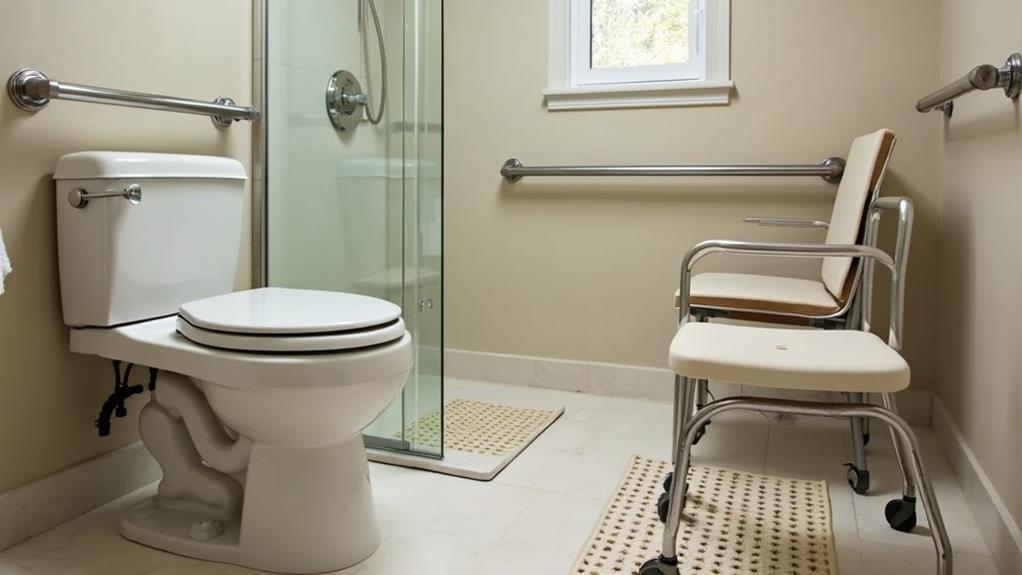
The bathroom's slippery surfaces and tight spaces make it one of the most hazardous areas for older adults. To reduce the risk of falls in older individuals, start by installing grab bars near the toilet and inside and outside the tub and shower. These bars provide essential support and stability, helping to improve the quality of life for your loved one.
Next, use nonskid mats or strips on wet surfaces. Water exposure in the bathroom increases the likelihood of slips, so including these non-slip materials can provide extra grip. It's a simple step that can make your home much safer.
Ensure that a light is kept on at night or consider using an automatic night light. Improved visibility during nighttime visits can greatly reduce fall risks. Moreover, keep all bathroom items, like toiletries and towels, within easy reach. This minimizes the need for stretching or bending, which are common causes of falls.
Regularly inspect and maintain bathroom fixtures and flooring. Address any hazards, such as loose tiles or worn-out mats, promptly to prevent accidents. By taking these proactive steps, you can make the bathroom a safer place and improve the general safety of your home.
Outdoor Area Maintenance
Caring for the outdoor areas of a home is crucial to preventing falls among older adults. To keep elderly loved ones safe, you need to focus on maintaining and securing outdoor spaces. Start by verifying that outdoor steps leading to the front door are even, intact, and free of obstructions. This will help prevent tripping hazards.
Applying non-slip materials to outdoor stairways and confirming that handrails are securely fastened can provide much-needed stability. Clear outdoor areas of debris like leaves or garden tools to minimize the risk of slips or trips. During winter, treat walkways with ice melt or sand to improve traction and prevent slips on icy surfaces. Regularly inspect and maintain outdoor lighting to guarantee pathways are well-lit at night, reducing the risk of falls in low visibility conditions.
To improve safety:
- Verify steps are even and free of obstructions
- Apply non-slip materials to stairways
- Secure handrails for added stability
- Clear debris regularly
- Use ice melt or sand in winter