How to Cut Your Toenails Safely at Home
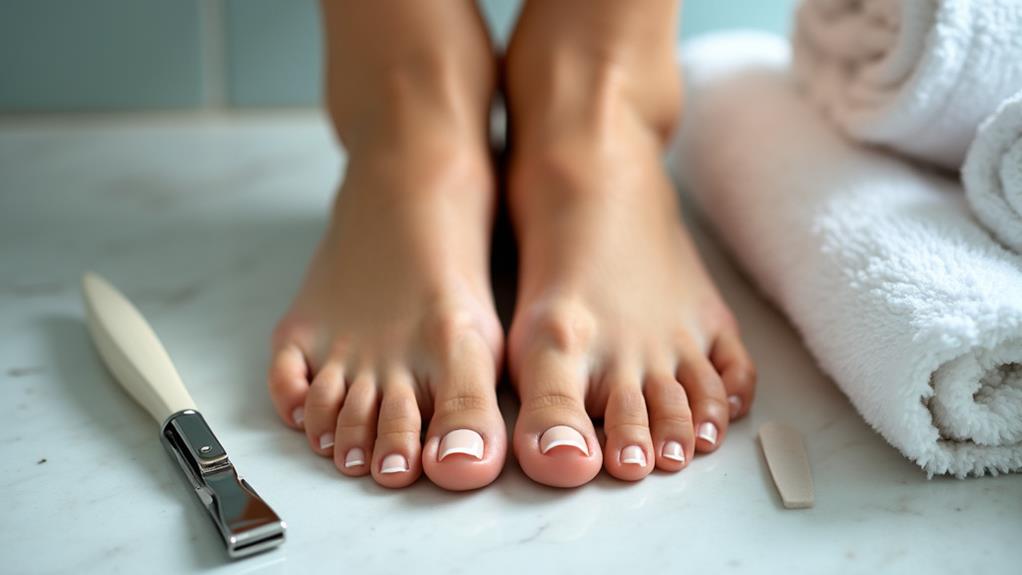
Cutting your toenails safely at home involves following several essential steps to prevent discomfort and infections. Start by gathering your tools, ensuring they are clean and sanitized. Soak your feet in warm water to soften the nails, making them easier to trim. When cutting, it's crucial to trim straight across to avoid ingrown nails. After trimming, file the edges to smooth any rough spots. Applying a moisturizer can help keep your nails and surrounding skin healthy. Stick around to learn these fundamental techniques and aftercare tips to maintain well-groomed and healthy toenails.
Gather Your Tools
Preparation is key when it comes to cutting your toenails safely. Start by gathering all necessary tools, including a good pair of toenail clippers or manicure scissors designed for thicker toenails. Using the right tools ensures a clean cut without much hassle. Remember to maintain separate clippers for your fingers and toes to prevent bacteria transfer and reduce the risk of infection.
Before you begin, thoroughly clean your clippers with an antiseptic solution to maintain hygiene and minimize the risk of infection. Once your tools are clean, you can proceed to trim your toenails.
When trimming, cut straight across rather than curving around the side of the nail to help prevent ingrown toenails. After making your cuts, use a nail file to smooth out any jagged edges, preventing snags on your socks or shoes and promoting comfort.
To keep your workspace tidy, have a soft towel handy to catch your nail clippings. This simple step makes the process cleaner and easier to manage. With these preparations, you're set to trim your toenails safely and effectively.
Clean and Soften Nails
Before trimming your toenails, it's essential to clean and soften them for a smoother and safer process. Begin by washing your feet thoroughly with warm water and mild soap to eliminate dirt and bacteria, thereby reducing the risk of infections. Maintaining good hygiene is crucial for keeping your toenails healthy and preventing complications during trimming.
Next, soak your toenails in warm water for 10-15 minutes to soften them, making them easier to cut, especially if they are thick or tough. Adding mild soap to the soaking water can further cleanse the nails and surrounding skin, promoting better overall nail health.
Ensure your toenails are completely dry before cutting. Wet toenails can be slippery and difficult to cut accurately, increasing the risk of uneven cuts or accidental nicks. Pat them dry with a clean towel, ensuring all moisture is removed.
Proper Cutting Technique
When cutting your toenails, always use sharp, clean tools to prevent damage and infection. Cut them straight across every few weeks, leaving a bit of length to avoid pain and ingrown nails. Finally, smooth any rough edges with an emery board to ensure comfort and prevent snagging.
Tools and Hygiene
Using the right tools and maintaining proper hygiene is essential for cutting toenails safely. Use nail clippers or manicure scissors specifically designed for toenails, as regular fingernail clippers often struggle with thicker toenails. Always have separate clippers for fingers and toes to prevent cross-contamination of bacteria and fungi.
Before you start, thoroughly clean your feet to remove any dirt and reduce the risk of infection. Ensure your toenail clippers are sanitized with an antiseptic solution after each use to maintain good hygiene and prevent potential complications.
When trimming, cut your toenails straight across to minimize the risk of ingrown toenails. Avoid rounding the corners to keep them raised above the surrounding skin. If your toenails are particularly hard, soak them in warm water beforehand to soften them, making them easier to trim without bending or tearing.
After cutting, use a nail file to smooth any jagged edges. This helps prevent snags on socks or shoes and supports overall nail health.
Cutting Frequency
Maintaining the right cutting frequency is crucial for keeping your toenails healthy and preventing issues like ingrown nails. Most individuals should trim their toenails every 6 to 8 weeks; however, if you are more active or have health conditions such as diabetes, you may need to do it more frequently. Always cut your toenails straight across to prevent ingrown nails, ensuring the corners lie slightly above the skin.
Toenails grow at varying rates, making it important to monitor their growth regularly. You might need to adjust your cutting schedule, especially with seasonal changes that can affect nail growth. Soak your toenails in warm water before cutting to soften them, making the process smoother and reducing the risk of brittleness and splitting.
When trimming, leave a small white nail tip, about 1-2 mm. Cutting too short can be painful and may damage the nail bed, potentially leading to ingrown nails. By regularly checking your toenail growth and adjusting your routine as necessary, you can maintain optimal nail health and avoid discomfort.
Cutting Method
Mastering the proper cutting technique is essential for maintaining healthy toenails and preventing common issues like ingrown nails. Begin by soaking your feet in warm water for about 10 minutes. This softens your toenails, making them easier to cut without causing damage. Use dedicated toenail clippers or manicure scissors to avoid jagged edges and ensure a clean trim.
When cutting your toenails, aim to cut them straight across. This minimizes the risk of the nails growing into the skin. Ensure the corners are slightly raised above the skin's surface to further prevent ingrown nails. Trim your toenails approximately every 6 to 8 weeks, or more frequently if you're very active. The ideal length is to leave 1-2 mm of white nail at the tips.
After cutting, use a nail file to smooth any rough edges. This prevents snagging on socks or shoes and contributes to overall nail health. Regularly following this technique will ensure your toenails remain in prime condition and help you avoid common health issues related to improper trimming.
File and Smooth Edges
After cutting your toenails, use a nail file or emery board to smooth any jagged edges, reducing the risk of snagging on socks or shoes. Follow these steps for effective filing:
- File the Corners: Gently file the corners of your nails to maintain a slightly rounded shape. This helps prevent ingrown toenails while keeping the nails straight across.
- One Direction Only: Use gentle strokes in one direction rather than a back-and-forth motion. This avoids weakening the nail structure and ensures a smooth finish.
- Inspect and Clean: Regularly inspect and clean your nail files to prevent bacteria buildup and maintain their effectiveness.
Aim for a nail length where 1-2 mm of the white tip remains intact. This promotes health and comfort. Incorporate this step into your nail care routine every time you use nail clippers or manicure tools. Smoothing jagged edges reduces the chances of your nails catching on fabric and helps maintain a neat appearance. Regularly inspect and clean your tools for optimal results and to keep your nails in top condition.
Post-Cutting Care

Caring for your toenails doesn't end with cutting and filing. Post-cutting care is essential to maintain foot health. Start by moisturizing your feet with a nourishing lotion to keep the skin hydrated and prevent dryness, which helps keep the area around your nails soft and less prone to cracking.
Next, inspect your toenails for any signs of infection, such as redness, swelling, or discharge, particularly around the edges where you trimmed. Early detection of potential issues can prevent more significant problems later.
Use a nail file to smooth out any sharp edges on your toenails. This step is crucial to prevent your nails from snagging on socks or shoes, which could cause discomfort or injury.
Additionally, keep your toenails clean and dry. Moisture, especially between the toes, can lead to fungal infections. Make it a habit to dry your feet thoroughly after bathing or swimming to minimize this risk.
If you experience pain or notice abnormal changes in your toenails post-trim, consult a healthcare professional. Proper post-cutting care ensures your toenails remain healthy and problem-free.
Recognize Warning Signs
Recognizing warning signs early can prevent painful and potentially serious toenail issues. When trimming your toenails, be vigilant for any signs of trouble. Redness or swelling around the nail edges can indicate an ingrown toenail, which should be addressed promptly to prevent worsening.
Persistent pain or tenderness in your toe may signal an infection or a worsening condition. If you observe any drainage or pus, this clearly indicates an infection that requires medical attention. Ignoring these symptoms can lead to more severe complications.
Monitor changes in your nail's appearance. Yellowing or dark spots might suggest fungal infections or other health problems. Furthermore, thickening or deformities in the toenail can indicate structural issues that need prompt attention.
Here's a quick checklist for recognizing warning signs:
- Redness and Swelling: Check the nail edges for any signs of redness or swelling, which may indicate an ingrown toenail.
- Pain and Infection: Be aware of persistent pain or any drainage, as these could signal an infection.
- Nail Changes: Observe any changes in color, thickness, or shape of your toenails.