How to Manage Elderly Care Schedules With Multiple Caregivers

To manage elderly care schedules with multiple caregivers, start by identifying the elder's medical and companionship needs. Use care calendars and shared apps to clearly assign tasks and appointments, minimizing confusion. Effective communication is essential; opt for group messaging apps and regular family meetings to guarantee everyone is on the same page. Delegate responsibilities to prevent caregiver burnout and keep track of tasks with structured checklists and reminders. External resources, like in-home care services or community programs, can also provide valuable support. By following these strategies, you'll create a seamless and supportive caregiving environment. There's more to investigate on enhancing your caregiving system.
Identifying Care Needs
Identifying care needs is the foundation of effective elderly care management. To create a successful caregiving plan, you must distinguish between urgent medical needs and general companionship desires. This helps you prioritize care tasks accurately. Understanding each elder's specific needs, such as medication management and mobility assistance, guarantees you can allocate your time and resources efficiently.
Regular assessments are vital. By evaluating each elder's condition frequently, you can identify any changes and adjust your caregiving strategies and schedules accordingly. This proactive approach allows you to stay ahead of potential issues and provide timely support.
Utilize structured checklists for daily care activities to make sure all care needs are consistently addressed. This systematic approach helps you track necessary tasks, from administering medication to assisting with mobility.
Communication is key. Engage in open dialogues with elders about their preferences and needs. This fosters a better understanding and helps you prioritize care effectively. By knowing what matters most to them, you can tailor your caregiving approach to improve their quality of life.
Incorporate these practices into your caregiver schedule to create a balanced, responsive, and compassionate care environment.
Effective Communication Strategies
Effective communication strategies are the backbone of successful elderly care management. Establishing clear communication channels, like group messaging apps, can reduce caregiver stress by up to 30%. By guaranteeing everyone is informed about care responsibilities and updates, you can prevent confusion and oversight.
Organize regular family meetings to discuss caregiving roles and expectations. This helps improve organization and prevents misunderstandings among caregivers. It's vital to provide regular updates on medications and appointments to avoid any miscommunication about task assignments.
Using shared documents for roles and responsibilities promotes accountability. Each caregiver will know their specific duties, which is significant for maintaining a smooth operation. Effective communication about individual elder needs and preferences fosters a collaborative environment. This not only improves care quality but also increases caregiver satisfaction.
Incorporating these strategies guarantees everyone is on the same page and working towards the common goal of providing the best care possible. When communication is clear and consistent, you create a supportive and efficient caregiving team. This leads to better outcomes for the elder and a more manageable experience for caregivers.
Scheduling Tools and Techniques

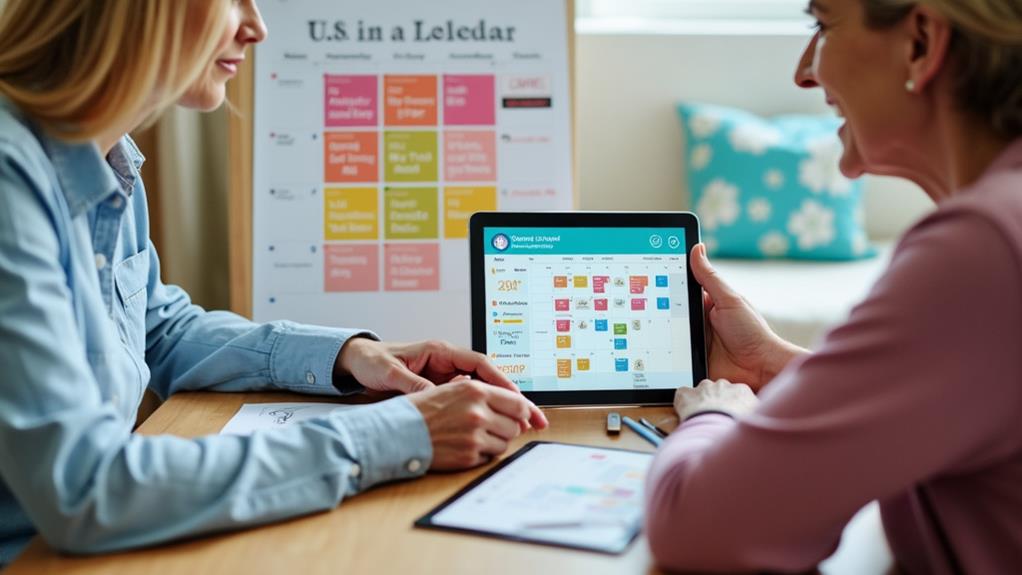
Steering through the complexities of elderly care becomes considerably easier with the right scheduling tools and techniques. Using care calendars can visually represent task assignments and deadlines, making organization among multiple caregivers seamless. Scheduling software helps manage caregiver availability and track necessary tasks, ensuring efficient coordination of care.
Implementing a structured daily schedule with specific time slots for each elder's needs allows you to prioritize tasks and avoid feeling overwhelmed. Regular family meetings to discuss schedules and responsibilities are essential for maintaining clear communication, reducing confusion, and fostering accountability among caregivers.
Incorporating reminders and alarms within your scheduling tools helps everyone stay on track with medications and appointments, preventing any oversight. Medication tracking becomes straightforward, ensuring no doses are missed. Efficient coordination is key, and utilizing these tools can make the difference between a chaotic day and a smoothly run operation.
Delegating Responsibilities
Managing elderly care schedules efficiently hinges on the ability to delegate responsibilities effectively. When you spread the workload among multiple caregivers, you greatly reduce the risk of caregiver burnout, which affects nearly 60% of family caregivers in the U.S. Clear task assignments streamline efforts, making certain that all elder care needs are met without overwhelming any single individual.
To make delegating responsibilities easier and more effective:
- Create a caregiving calendar: A visual representation of tasks and deadlines helps boost accountability and communication among caregivers.
- Hold regular family meetings: Discussing caregiving roles and responsibilities improves coordination and reduces misunderstandings, fostering a collaborative environment.
- Use technology: Shared apps or platforms can facilitate better task management, making it easier to track responsibilities and updates.
- Establish clear communication channels: Make certain everyone knows who is responsible for what, which helps avoid confusion and improve efficiency.
Utilizing External Resources
Incorporating external resources into your caregiving routine can make a world of difference in managing elderly care schedules. In-home care services and adult day care programs provide professional support, reducing the burden on family caregivers and guaranteeing consistent care for your elderly loved ones. These services can address specific elder care needs, allowing you to focus on other responsibilities.
Community organizations like Senior Companions offer free companionship services. This allows you to allocate your time more effectively while making sure your loved ones receive the attention they need. Local Area Agencies on Aging can connect you with important resources, including financial assistance programs and respite care. These agencies are invaluable for finding services tailored to your family's unique situation.
Sharing caregiving responsibilities with family members is vital. Open communication about needs and expectations improves support networks among siblings and friends, making the caregiving experience smoother for everyone involved. Utilizing technology, such as the Avanlee app, helps centralize caregiving tasks and communication, greatly improving organization and reducing caregiver burnout. By leveraging these external resources, you can better manage your caregiving responsibilities and guarantee your loved ones receive the best possible care.