The Benefits of Fidget Toys for PTSD: Coping Strategies and Relaxation

Managing PTSD often requires effective strategies to handle anxiety and intrusive thoughts. Contrary to popular belief, fidget toys are not just for children; they offer significant benefits for grounding and emotional regulation in adults as well. These small devices provide tactile feedback through simple, repetitive motions, helping to redirect focus and cultivate a sense of calm. This tactile engagement can be particularly effective during overwhelming episodes, aiding in staying present and reducing distress. But how do these gadgets impact mental health, and what scientific evidence supports their use? Let's delve deeper into this topic.
Understanding PTSD and Fidget Toys
Understanding how fidget toys can assist in managing PTSD symptoms is crucial. PTSD often involves intense anxiety and intrusive thoughts, making daily activities difficult. Fidget toys like spinners and stress balls provide tactile stimulation that can help ground you in the present moment, redirecting focus from distressing memories or flashbacks.
Incorporating fidget toys into your coping strategies can be highly beneficial. Their repetitive motions act as a distraction, aiding in self-soothing and fostering a sense of calm. This is particularly useful in overwhelming or anxiety-inducing situations, offering a portable and accessible way to manage mental health.
Fidget toys also support emotional regulation, a critical component of PTSD recovery. They help restore a sense of control and safety, often disrupted by trauma. By engaging your hands and focusing your mind, these toys can significantly aid in your recovery journey, helping you navigate daily life with more ease and confidence.
Emotional Regulation and Grounding
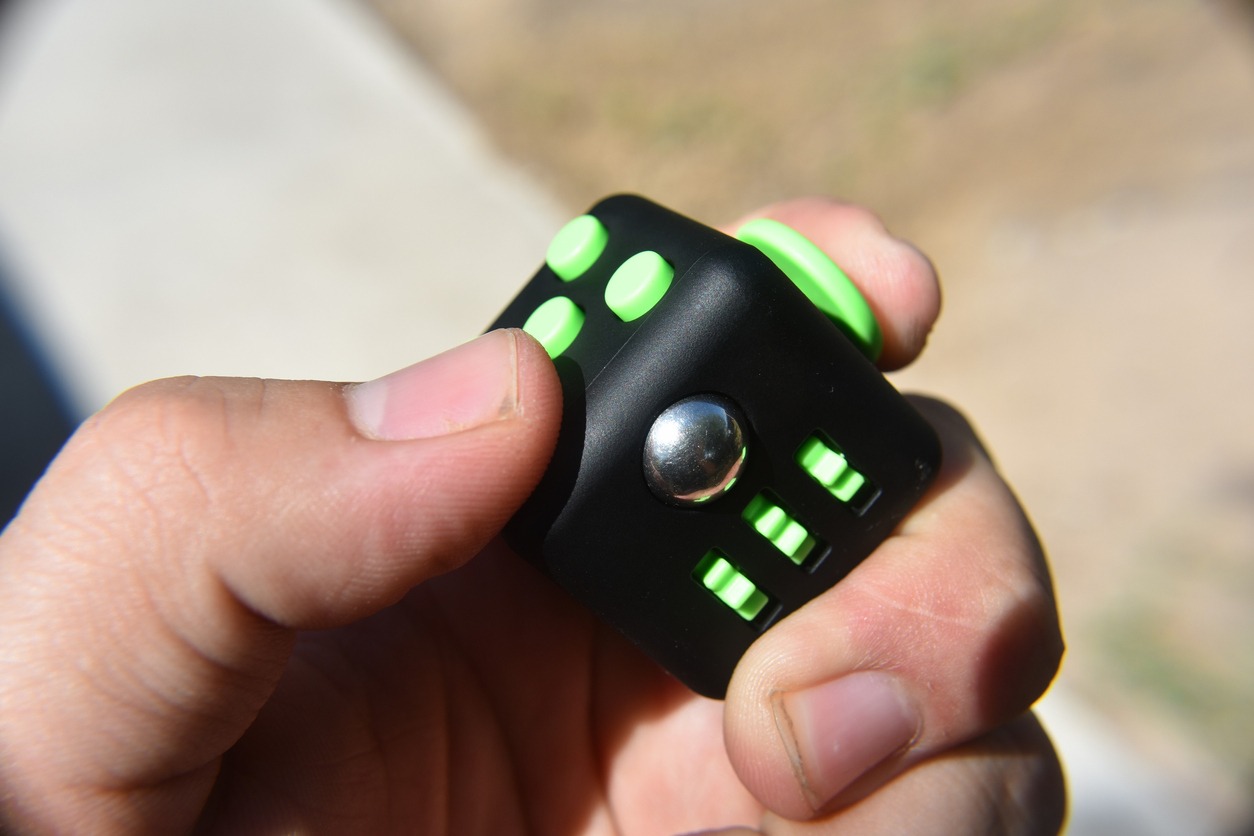
Fidget toys are effective tools for emotional regulation and grounding, particularly for individuals with PTSD. By engaging in repetitive motions, these toys help redirect focus and manage distressing thoughts, promoting self-soothing behaviors essential for handling overwhelming feelings. Tools such as spinners, cubes, stress balls, and putty offer tactile experiences that can shift attention away from anxiety-provoking thoughts.
Research supports that fidget toys can significantly reduce anxiety levels, aiding in coping with PTSD symptoms and triggers. For instance, using stress balls or putty can create a calming effect, helping individuals regain control over their emotions and reduce hypersensitivity. Integrating fidget toys into coping strategies can foster mindfulness and focus, crucial for effective emotional regulation.
Here's a quick comparison to understand their benefits:
| Fidget Toy Type | Benefit |
|---|---|
| Spinners | Redirect focus, reduce anxiety |
| Cubes | Promote self-soothing, improve emotional regulation |
| Stress Balls | Provide a calming effect, alleviate hypersensitivity |
| Putty | Encourage mindfulness, enhance focus |
Incorporating these fidget toys into your personalized coping strategies can significantly aid in managing PTSD. They offer simple yet effective means to stay grounded and maintain emotional balance.
Scientific Insights on Fidgeting

Scientific studies have revealed that fidget toys can significantly alleviate anxiety and improve focus, making them valuable tools for individuals with PTSD. Classified as rapid stress management techniques (RSMT), these toys provide a physical outlet for anxiety and stress relief, which is crucial for those dealing with anxiety disorders. Fidgeting as a stress management technique helps people concentrate by enabling them to manage distractions and maintain focus during tasks.
Emerging evidence from UC Davis supports the idea that fidget toys can reduce anxiety and boost attention in both children and adults. This is particularly beneficial for children with attention issues, helping them stay on task. A 2013 study even suggested that fidgeting during lectures improved material retention, linking physical movement to better learning outcomes.
The Journal of At-Risk Issues has investigated the effectiveness of fidget tools, highlighting their potential in therapeutic settings. By providing a simple yet effective way to manage stress, fidget toys can offer significant benefits for those with PTSD. Understanding the science behind fidgeting underscores their value in promoting mental well-being and cognitive performance.
Personalized Therapy Approaches
Personalized therapy approaches for PTSD emphasize individualized coping strategies, where tools like fidget toys play a crucial role. Integrating fidget toys into therapy can enhance the management of anxiety and stress. These tools act as a stress management technique, aiding in anxiety reduction and emotional regulation.
In collaboration with mental health professionals, you can develop a customized treatment plan that includes fidgeting techniques. This approach ensures that therapy is tailored to your specific needs. Fidget toys can be integrated with traditional therapies such as EMDR (Eye Movement Desensitization and Reprocessing) and CBT (Cognitive Behavioral Therapy), creating a comprehensive therapy regimen that optimizes treatment outcomes.
Using fidget toys can promote self-soothing behaviors, essential for managing PTSD symptoms. These tools help maintain focus and grounding, reducing hypersensitivity and providing a sense of control. By exploring various therapeutic interventions, including fidget toys, you can identify what works best for you and improve your overall mental health.
Ultimately, personalized therapy approaches that incorporate fidget toys can significantly enhance your ability to manage PTSD and lead to better therapeutic results.
Resources and Support

Accessing the right resources and support networks can significantly impact your recovery from PTSD. PTSD UK is a fundamental resource, offering valuable research materials and coping strategies tailored to manage PTSD symptoms. While fidget toys can help with anxiety and stress management, they are most effective when used in conjunction with professional help.
Online therapy platforms also provide valuable support, offering access to psychological therapies such as EMDR and CBT, both highly effective for treating PTSD. Additionally, practices like progressive muscle relaxation can enhance your overall well-being.
| Resource/Support | Benefits |
|---|---|
| PTSD UK | Tailored coping strategies and research |
| Online Therapy | Access to EMDR and CBT from home |
| Community Support | Sense of belonging and shared experiences |
Collaborating with mental health professionals to develop personalized coping strategies is essential. This may include using fidget toys alongside other therapeutic techniques. Addressing your feelings and seeking professional guidance, even years after trauma, is crucial for long-term recovery. Community support networks also play a vital role, providing a sense of belonging and shared experiences to aid in your healing journey.
Related posts