The History and Origins of Wheatgrass: From Ancient Times to Modern Superfood

Wheatgrass, now celebrated as a modern superfood, has a history spanning over 5,000 years. Ancient Egyptians and Mesopotamians valued it for its energy-boosting and health-enhancing properties. In the early 1900s, pioneers like Ann Wigmore reintroduced wheatgrass as a healing food. How did this humble grass evolve from an ancient remedy to a staple in contemporary wellness practices? And what exactly makes it so special in today's health-conscious world? Let's explore the fascinating journey of wheatgrass from antiquity to modernity.
Ancient Beginnings
For over 5,000 years, wheatgrass has been valued for its health benefits, originating in ancient Egypt and Mesopotamia. The ancient Egyptians regarded wheatgrass as a source of energy and health, believing its rapid growth under sunlight connected it to the sun's powerful energy, thus making it an essential part of their diet and medicine.
Ancient texts such as the Essene Gospel of Peace refer to wheatgrass as the 'perfect food' for humans. This text emphasizes the importance of consuming raw foods, particularly wheatgrass, for optimal health. The Essenes, a mystical Jewish sect, believed that wheatgrass offered unparalleled nourishment and healing properties.
In addition, wheatgrass held a significant place in traditional Ayurvedic practices in India. Ayurvedic healers used wheatgrass for its rejuvenating and healing effects, believing it could restore balance and energy to the body, making it a key component of their health regimens.
Early 1900s Rediscovery
In the early 1900s, the rediscovery of wheatgrass's health benefits reignited interest in this ancient superfood. Edmund Bordeaux Szekely unearthed an ancient manuscript that emphasized the health advantages of raw foods and grasses, which laid the groundwork for wheatgrass's resurgence. This period saw the formation of the Biogenic Society, which promoted wheatgrass as a 'perfect food' for humans, drawing largely from the Essene Gospel of Peace.
As health food awareness grew, wheatgrass juice gained prominence. Essene books highlighting wheatgrass's benefits became widely available in health food stores, further cementing its place in modern dietary practices. In the 1940s, scientific interest in chlorophyll, a key component of wheatgrass, surged. Charles Kettering funded studies under FDA standards to investigate its healing properties, adding credibility to wheatgrass's health claims.
This era was crucial in transitioning wheatgrass from an ancient health practice to a modern superfood. By the mid-20th century, its benefits were documented in over 40 medical journal articles, solidifying wheatgrass juice as a staple in health-conscious diets.
Essene Teachings

The Essene Gospel of Peace emphasizes wheatgrass as a cornerstone of a holistic and healthful diet. This ancient manuscript highlights the significance of raw foods, particularly grasses like wheatgrass, due to their exceptional nutritional value and healing properties. According to Essene teachings, wheatgrass is considered the 'perfect food' for humans.
The Essenes believed that incorporating wheatgrass into one's diet could enhance vitality, spiritual well-being, and foster a closer connection to nature. They viewed it as more than just nourishment; it was a path to achieving a balanced and healthful lifestyle. This belief underscores the holistic approach advocated by the Essenes, blending physical health with spiritual growth.
In the early 1900s, the Biogenic Society was established to promote these ancient Essene teachings, advocating for the consumption of wheatgrass as part of a healthful eating regimen. Modern awareness and interest in wheatgrass have been significantly influenced by the availability of Essene texts in health food stores. These writings have played a crucial role in highlighting wheatgrass as a superfood, drawing on the wisdom of ancient practices to inform contemporary dietary choices.
Chlorophyll Research
Research on chlorophyll from the 1940s documented its impressive healing effects in over 40 medical journal articles. Chlorophyll's structural similarity to hemoglobin provides blood-building properties that are crucial for addressing iron deficiency and enhancing oxygen transport. Investigating chlorophyll as a natural remedy highlights its role in detoxification and its potential benefits, particularly through wheatgrass consumption.
Healing Effects Documented
In the 1940s, Charles Kettering funded studies on chlorophyll that led to significant publications in medical journals, documenting its profound healing effects. Chlorophyll, constituting about 70% of wheatgrass, was found to have potent detoxifying properties. Research revealed that it promotes blood-building by enhancing hemoglobin production, making it a powerful agent in improving general health.
Studies adhering to FDA standards showcased chlorophyll's ability to reduce oxidative stress, contributing to its notable antioxidant, antibacterial, and anti-inflammatory effects. Its natural healing potential stands in stark contrast to synthetic drugs, which often come with unwanted side effects. This has led to increased awareness and interest in chlorophyll as a natural remedy.
The compelling healing properties of chlorophyll have resulted in its inclusion in numerous medical practices and wellness products, ranging from detox drinks to topical ointments. Understanding the documented healing effects of chlorophyll helps explain why it has earned a respected place in the world of natural health. The research from the 1940s laid a foundation that continues to support its use today.
Natural Remedy Exploration
Numerous studies have investigated chlorophyll's potential as a natural remedy, highlighting its diverse health benefits. In the 1940s, Charles Kettering funded research in compliance with FDA standards, resulting in over 40 medical journal articles documenting chlorophyll's healing effects. Chlorophyll, which constitutes about 70% of wheatgrass, is renowned for its detoxification properties and its ability to promote blood health.
One remarkable aspect of chlorophyll is its structural similarity to hemoglobin, the molecule responsible for oxygen transport in blood. This similarity allows chlorophyll to enhance oxygen transport, making it particularly effective in addressing iron deficiency. Chlorophyll's ability to support natural healing extends beyond blood health, as it also possesses powerful antibacterial and anti-inflammatory properties. Ann Wigmore's work in the 1960s further solidified chlorophyll's role in health-promoting practices.
Amid growing concerns over the pharmaceutical industry's focus on synthetic drugs, interest in natural remedies has surged. Chlorophyll has emerged as a key player in this arena, valued for its multifaceted benefits and its potential to offer a more holistic approach to healing.
Ann Wigmore's Influence

Ann Wigmore's pioneering work in the 1960s brought wheatgrass into the spotlight as a powerful healing food for multiple ailments, including cancer. She dedicated her life to promoting the benefits of wheatgrass, founding the Ann Wigmore Institute in Boston, where she educated many about the health benefits of living foods, particularly wheatgrass.
Wigmore's influence extended beyond her institute. She authored over 35 books on wheatgrass and living foods, significantly advancing the understanding of its nutritional and medicinal properties. Her extensive research identified wheatgrass as the most medicinal among 4,700 grass varieties, establishing her as a key figure in the modern superfood movement and transforming public perceptions of wheatgrass.
Additionally, Wigmore's teachings were inspired by the Essene Gospel of Peace, an ancient text advocating raw food consumption and recognizing wheatgrass as an ideal food for humans. Her holistic approach merged historical wisdom with modern research, forming a strong foundation for the current popularity of wheatgrass in health-conscious diets. Through her efforts, wheatgrass transitioned from obscurity to a staple in health-focused nutrition.
Hagiwara's Insights
Yoshihide Hagiwara turned to natural remedies after experiencing health challenges, drawing inspiration from Hippocrates' belief in the power of diet. He identified wheatgrass as having exceptional medicinal qualities among thousands of grasses, emphasizing its importance in achieving true health.
Exploring Natural Remedies
Driven by a quest for true health, Yoshihide Hagiwara examined natural remedies and revealed the remarkable benefits of wheatgrass. After experiencing personal illness, Hagiwara, a pharmaceutical executive, shifted his focus to the power of diet and natural healing. Among the 4,700 grass varieties he studied, wheatgrass stood out for its exceptional health benefits.
Influenced by the teachings of Hippocrates, Hagiwara emphasized that a proper diet is foundational to well-being and the body's self-healing capabilities. Through his research, he identified several key benefits of incorporating wheatgrass into your diet:
- Nutrient-Rich: Wheatgrass is packed with vital vitamins and minerals, including vitamins A, C, and E, iron, calcium, and magnesium.
- Detoxification: It aids in detoxifying the body, helping to cleanse the liver and improve overall toxin elimination.
- Improved Digestion: Wheatgrass can boost digestive health by promoting beneficial gut flora and aiding in nutrient absorption.
- Boosted Immunity: Consuming wheatgrass regularly can strengthen the immune system, making you less susceptible to illnesses.
Hagiwara's insights on natural remedies have significantly influenced modern health practices, advocating for the importance of unprocessed foods and the incredible benefits of wheatgrass. His work has played a crucial role in the acceptance and awareness of natural healing methods.
Influence of Hippocrates
Inspired by the timeless teachings of Hippocrates, Yoshihide Hagiwara explored natural remedies, uncovering the significant health benefits of wheatgrass. Often called the father of medicine, Hippocrates emphasized the critical role of diet in maintaining health, advocating that food should be your medicine. This philosophy deeply influenced Hagiwara's approach to wellness.
Hagiwara's research into the nutritional composition of wheatgrass revealed it to be a potent health supplement, rich in vital vitamins, minerals, and enzymes. This finding supports the idea that unprocessed, natural foods are essential for optimal health, aligning perfectly with Hippocrates' belief in the body's self-healing capabilities when supported by proper nutrition.
Dietary Health Emphasis
Building on his personal health journey, Yoshihide Hagiwara emphasized the critical role of diet in achieving optimal health, echoing the wisdom of Hippocrates. As a pharmaceutical executive who turned to natural remedies after facing illness, Hagiwara discovered the significant benefits of grasses, particularly wheatgrass, as a dietary supplement. His research highlighted the importance of diet in enhancing the body's self-healing capabilities.
Hagiwara's insights into dietary health can be summarized as follows:
- Nutritional Richness: Wheatgrass is abundant in essential vitamins, minerals, and enzymes that promote overall wellness and vitality. Its nutrient-dense profile makes it a valuable dietary supplement for improving health.
- Natural Foods: He advocated for incorporating natural, unprocessed foods into daily nutrition, emphasizing that these foods support the body's natural functions and enhance physical well-being.
- Disease Prevention: Proper nutrition, including the consumption of wheatgrass, is fundamental in maintaining health and preventing disease, reflecting Hagiwara's belief in food as medicine.
- Modern Health Movements: Hagiwara's work has significantly influenced contemporary health approaches, reinforcing the idea that a well-balanced diet is essential for good health.
Nutritional Profile

Wheatgrass offers a robust nutritional profile, rich in essential vitamins, minerals, and amino acids. Incorporating wheatgrass into your diet provides a potent dose of vitamins A, C, E, K, and all B vitamins except B12, making it a valuable nutritional supplement for enhancing overall health.
A standout feature of wheatgrass is its high chlorophyll content, comprising about 70% of its composition. Chlorophyll is excellent for detoxifying the body and, due to its similarity to hemoglobin, can effectively support blood-building functions.
Wheatgrass also supplies 17 amino acids necessary for protein synthesis and maintaining health. Additionally, the beneficial enzymes in wheatgrass aid in digestion, ensuring optimal nutrient extraction from food.
The mineral content in wheatgrass is impressive, with high levels of magnesium, potassium, iron, and calcium, all crucial for various bodily functions. Its high fiber content further aids digestion and nutrient absorption. Moreover, wheatgrass is low in calories and fat-free, making it an ideal addition for weight management while delivering substantial nutritional benefits.
Health Benefits
Wheatgrass is a nutrient-dense superfood rich in essential vitamins and minerals. Its detoxifying properties aid in liver function and blood purification, which can improve digestion and overall health. Additionally, wheatgrass strengthens the immune system, contributing to increased energy levels and resilience.
Nutrient-Rich Powerhouse
Nutrient-Rich Powerhouse
Packed with essential vitamins and antioxidants, wheatgrass is a nutrient-dense superfood offering numerous health benefits. It is rich in vital vitamins, including A, C, E, K, and B-complex, making it a powerhouse for overall health. Additionally, wheatgrass contains approximately 70% chlorophyll, which plays a significant role in blood and liver purification.
Including wheatgrass in your diet can provide several benefits:
- Improved Digestion: Its high fiber content aids digestion and nutrient absorption, promoting a healthy gut.
- Increased Energy Levels: Regular consumption is linked to heightened energy, helping you feel more lively and active.
- Enhanced Immune Response: The antioxidants in wheatgrass bolster your immune system, making you less susceptible to illnesses.
- Weight Management: Low in calories and fat-free, wheatgrass is an excellent supplement for maintaining a healthy weight.
Wheatgrass not only supports immediate health but also contributes to long-term wellness. With its robust profile of vitamins and antioxidants, it's no wonder this ancient plant is considered a modern superfood.
Detoxification and Cleansing
Beyond its impressive nutrient profile, one of the standout benefits of incorporating wheatgrass into your diet is its powerful detoxification and cleansing properties. Wheatgrass is composed of approximately 70% chlorophyll, a natural compound believed to purify your blood and liver. By detoxifying these essential organs, you can help your body remove harmful substances more effectively.
The antioxidants present in wheatgrass play a significant role in reducing oxidative stress, which further supports your body's natural detoxification processes. Regular consumption of wheatgrass can also improve your digestion and increase nutrient absorption. This aids in the efficient elimination of toxins, making you feel more energized and less sluggish.
Chlorophyll found in wheatgrass is particularly beneficial for colon cleansing. It assists in maintaining a healthier digestive system, which is fundamental for overall well-being. Research suggests that these detoxifying effects can improve your immune response, although we'll investigate that in more detail in the next section. For now, know that by removing harmful substances from your body, wheatgrass contributes notably to your overall wellness. So, if you're looking to give your body a natural cleanse, wheatgrass might just be the superfood you need.
Immune System Support
Wheatgrass significantly enhances immune system function through its immune-activating oligosaccharides and rich nutrient content. These oligosaccharides activate immune cell receptors, bolstering the body's defenses against infections. Consistent consumption of wheatgrass can improve immune response, helping fend off common illnesses like colds and flu.
Wheatgrass's nutritional profile is abundant in essential vitamins and minerals that support immune health. Key benefits include:
- Vitamins: Wheatgrass is rich in vitamins A, C, and E, which are crucial for a healthy immune system.
- Minerals: It contains vital minerals such as iron, calcium, and magnesium, which are essential for various bodily functions, including immune responses.
- Antioxidants: The antioxidants in wheatgrass reduce oxidative stress, enhancing immune function and overall health.
- Detoxifying Properties: High in chlorophyll, wheatgrass supports liver function, aiding in detoxification and maintaining a robust immune system.
Consumption Methods
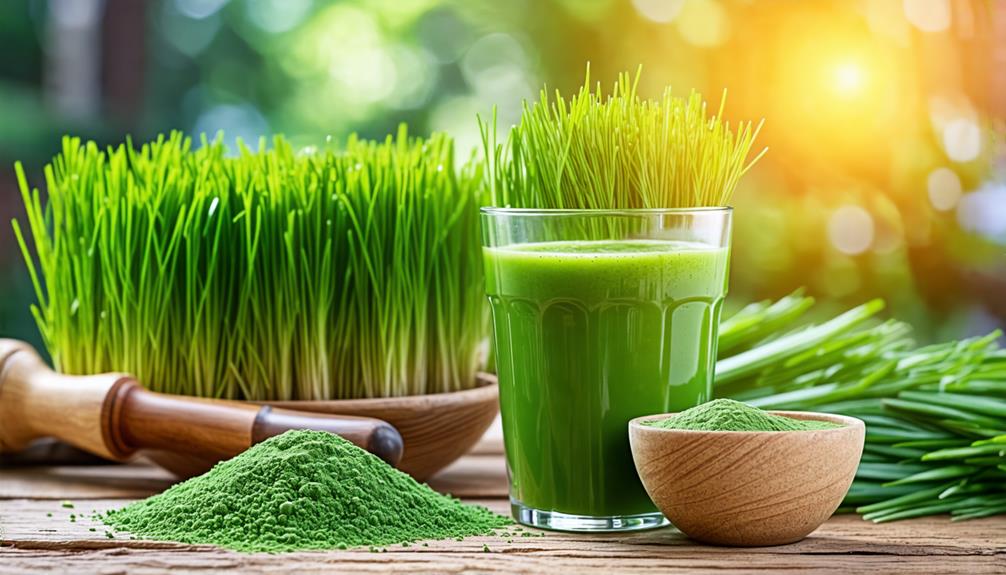
There are multiple convenient ways to incorporate wheatgrass into your daily routine, each providing unique health benefits. One popular option is wheatgrass juice; simply mix 5-10ml of fresh juice with water daily for optimal health benefits. Alternatively, you can prepare wheatgrass tea by boiling fresh leaves, which can help improve hemoglobin levels due to its rich nutrient content.
For those who prefer not to drink it, powdered wheatgrass is a versatile option. You can add a teaspoon to your smoothies, sprinkle it on salads, or take it as a supplement. If you enjoy warm beverages, consider making a wheatgrass decoction by boiling the leaves to extract their health properties. This can be enjoyed hot or cold, depending on your preference.
Capsules offer another convenient way to consume wheatgrass. They are ideal for on-the-go supplementation. However, it is advisable to introduce them gradually to avoid any digestive discomfort. With these various methods, incorporating wheatgrass into your daily life becomes both easy and beneficial, allowing you to enjoy its numerous health advantages.
Precautions and Considerations
Before incorporating wheatgrass into your diet, take several precautions to ensure it is safe and beneficial for you. While wheatgrass offers many health benefits, mindful consumption is necessary to avoid potential adverse effects.
Here are key precautions to keep in mind:
- Consult Healthcare Professionals: If you are pregnant or breastfeeding, consult your healthcare provider before using wheatgrass. It's essential to confirm that it won't interfere with your health or your baby's well-being.
- Monitor Blood Sugar Levels: Diabetic patients on medication should seek professional advice before consuming wheatgrass. It can affect blood sugar control, possibly requiring adjustments to your medication or diet plan.
- Avoid Excessive Consumption: Overconsumption of wheatgrass can lead to adverse effects such as nausea, headaches, and digestive issues like bloating or gas. Start with small amounts to gauge your body's tolerance.
- Complement, Don't Replace: Wheatgrass should not replace a balanced diet. It should complement a diverse and nutritious food intake to ensure you meet all your dietary needs.