The Role of Fidget Toys in Autism Therapy: Enhancing Focus and Calm

Curious about the impact of fidget toys in autism therapy? These seemingly simple tools do more than just keep hands busy; they provide essential sensory input that can significantly help individuals with autism focus and maintain calmness. By integrating fidget toys into therapy, professionals can address sensory processing challenges and enhance overall concentration. But which types of fidget toys are most effective, and how do they fit into a comprehensive therapy plan? Understanding these details can offer valuable insights into managing the complexities of autism.
Benefits of Fidget Toys
Fidget toys significantly enhance focus and attention by providing essential sensory input, particularly beneficial for individuals with autism. These tools help channel sensory input effectively, aiding in sensory processing, and enabling better concentration on tasks. Additionally, fidget toys can reduce anxiety levels and promote a calming effect, which is crucial for self-regulation.
For individuals with autism, who often face sensory processing challenges, fidget toys provide a vital means for sensory integration. By engaging tactile senses, these toys help balance sensory input, making the environment less overwhelming. Occupational therapists often recommend fidget toys to improve overall well-being and manage sensory needs effectively.
Beyond aiding sensory processing, fidget toys also contribute to the development of fine motor skills. Manipulating these toys enhances coordination and sensory awareness, which is vital for children on the autism spectrum. Incorporating fidget toys into daily routines can help individuals with autism navigate sensory challenges, improve focus, and reduce anxiety, leading to a more balanced and integrated sensory experience.
Occupational Therapy Integration
Occupational therapists often incorporate fidget toys into therapy sessions to address sensory processing issues and enhance focus in children with autism. These therapists provide personalized recommendations, tailoring fidget toys to each child's specific sensory needs, thereby promoting effective therapeutic strategies and improving overall outcomes.
Fidget toys are typically used during sensory breaks in occupational therapy to help regulate sensory input, reduce anxiety, and improve self-regulation. Research indicates that sensory-based interventions, including fidget toys, can significantly enhance attention and focus in individuals with autism spectrum disorder (ASD).
Collaboration between therapists and families is crucial for maximizing the benefits of fidget toys. By working together, they can develop effective strategies for using these tools at home and in school, ensuring consistent support across various environments. This teamwork fosters a comprehensive autism therapy approach that integrates fidget toys as a critical component.
Types of Fidget Toys
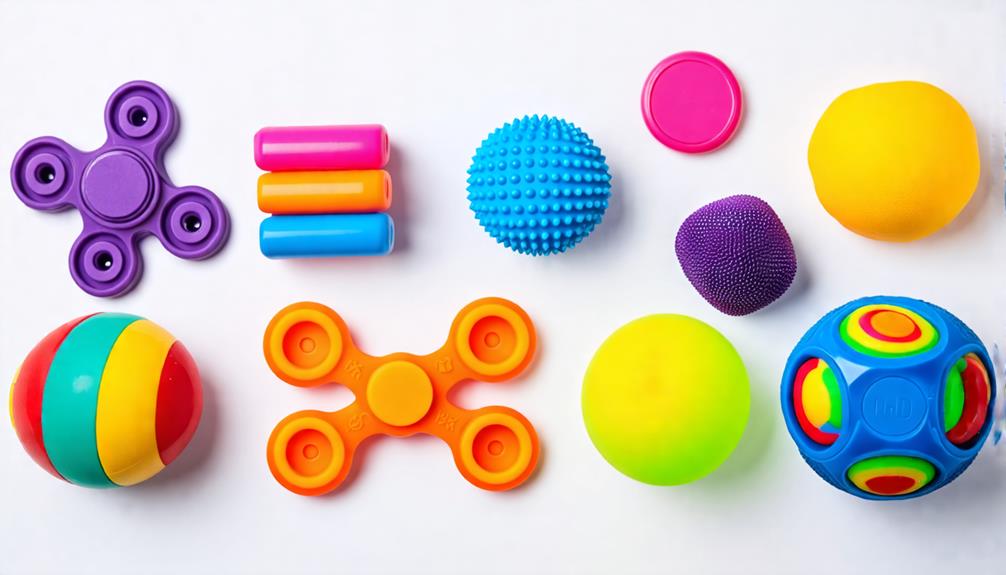
When exploring fidget toys for autism therapy, you'll find a wide array of options designed to meet distinct sensory needs. Each type of fidget toy serves a unique purpose in providing sensory engagement, aiding in focus and attention, and delivering calming effects.
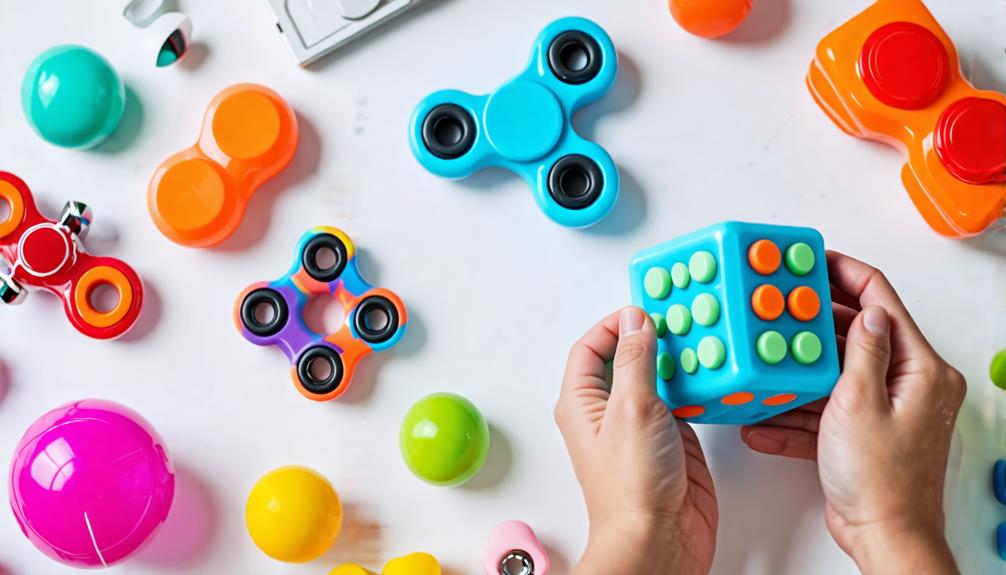
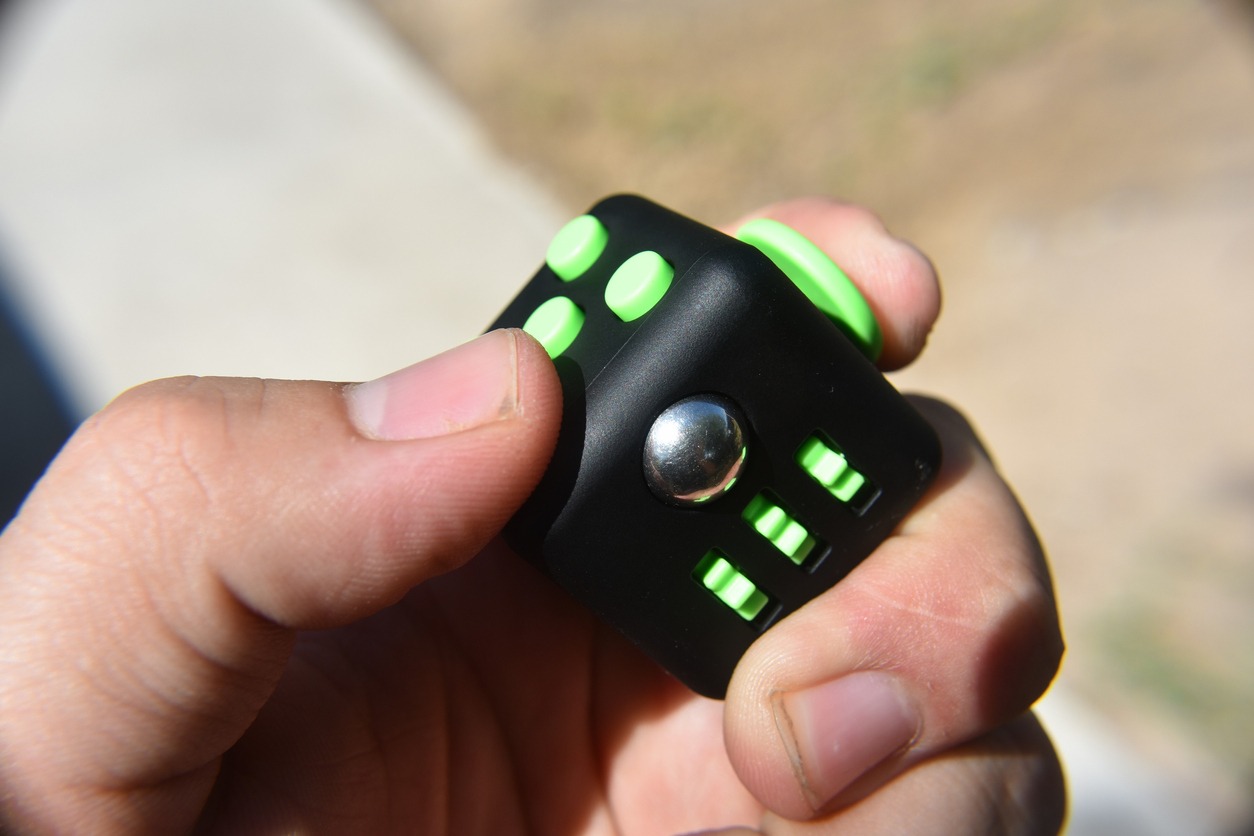
Fidget spinners and cubes are popular choices, offering multiple tactile experiences and sensory input to help manage stress and maintain concentration. Rainmaker toys, with their cascading colorful beads, provide soothing auditory and visual stimulation, enhancing focus and attention.
For hands-on tactile experiences, materials like sand and slime offer unique opportunities for sensory exploration. These materials encourage creativity and relaxation, allowing individuals to engage with them at their own pace.
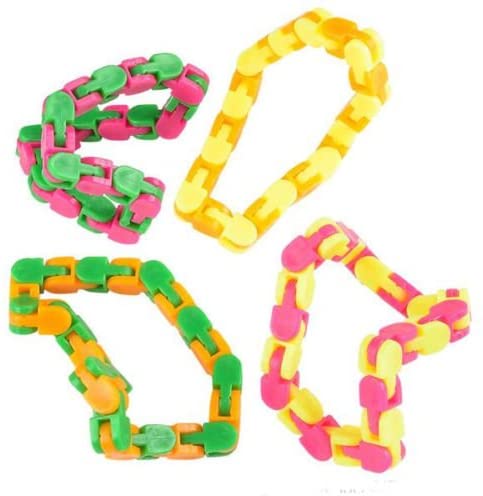
Stress balls and stretchy toys provide a constructive outlet for excess energy, helping to regulate nervous energy and offering stress relief. Sensory brushes and weighted blankets cater to individual preferences, offering additional calming and grounding effects.
Sensory Processing Challenges
Navigating sensory processing challenges is crucial for individuals with autism, as it significantly affects their ability to participate in daily activities and social interactions. Sensory processing disorder (SPD) impacts up to 90% of those on the autism spectrum, making tasks like dressing, eating, and socializing particularly stressful due to sensory overload. Managing these challenges requires effective strategies to regulate sensory input.
Fidget toys are often recommended by occupational therapists as part of sensory-based interventions. These toys offer tactile stimulation, assisting individuals with autism in managing their sensory needs and reducing anxiety during overwhelming situations. Incorporating fidget toys into your approach provides a practical tool for handling sensory experiences.
Individualized approaches are essential in sensory management. Research indicates that tailored interventions, which may include the use of fidget toys, can significantly enhance the overall functioning and well-being of individuals with sensory processing challenges. Implementing these strategies helps to focus and calm individuals, enabling them to navigate their daily lives more effectively. By understanding and addressing the unique sensory needs of each person, you can create a more supportive and effective environment for those with autism spectrum disorder.
Related posts