The Role of Technology in Modern Elderly Care
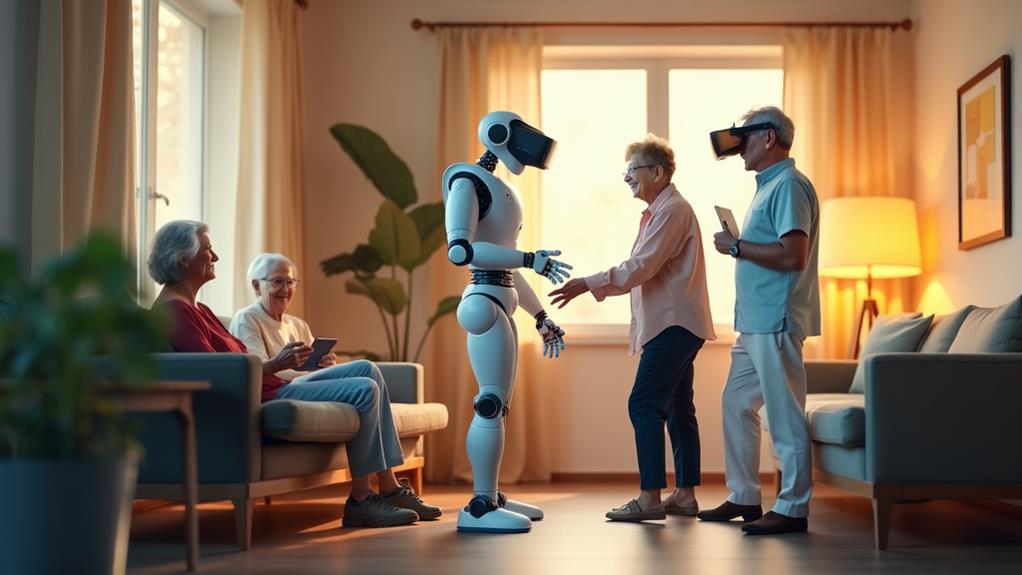
You'll find that technology plays a crucial role in modern elderly care, transforming it with remote patient monitoring, telemedicine, and wearable devices. These advancements reduce hospitalizations and make healthcare more accessible. Seniors benefit from smart home devices and voice-activated assistants, which improve independence and reduce social isolation. Predictive analytics and environmental sensors identify health risks early, enabling personalized care. Despite some challenges like reimbursement issues and slow healthcare system adoption, the increasing comfort with tech among seniors shows promise for future innovations. Uncover more insights into how each technology brings unparalleled improvements to elderly care.
Importance of Technology in Elderly Care
In regard to elderly care, technology has become essential. For older adults, tech innovations are transforming healthcare outcomes and everyday life. Remote patient monitoring allows seniors to stay at home while healthcare providers track essential signs and detect issues early, reducing hospitalizations and improving recovery. Telemedicine has surged, especially during the COVID-19 pandemic, ensuring that older adults can access medical care without leaving their homes. This shift in healthcare delivery has been fundamental, with telemedicine visits jumping from 4.6% to 21.1% among those over 70.
Wearables and fitness trackers have also gained popularity. These devices promote active lifestyles and precise health tracking, with ownership rising from 18% to 61% among seniors over 65 since 2013. Predictive analytics, combined with environmental sensors, help identify potential health risks early, ensuring safety and leading to better healthcare outcomes.
Moreover, voice-activated assistants simplify daily tasks, helping older adults maintain independence and reduce social isolation. By enabling seniors to manage their schedules, control home devices, or even make calls using simple voice commands, these technologies contribute greatly to their autonomy and general well-being.
Current Senior Care Landscape
Atlanta's senior care landscape reveals a growing demand for extensive and accessible services. With seniors aged 65 and older making up 11.5% of the population and this figure projected to rise, the pressure on healthcare providers to deliver quality care is increasing. Chronic diseases like diabetes and heart disease further complicate the healthcare management of older adults, requiring robust strategies to guarantee effective care.
However, transportation barriers often hinder seniors' access to medical appointments and crucial services, exacerbating existing health disparities. The COVID-19 pandemic has highlighted the urgent need for virtual care solutions, with telehealth visits for older adults soaring from 4.6% to 21.1%. This shift underscores the role of technology in bridging access gaps.
A fragmented healthcare system in Atlanta leaves many seniors struggling to navigate their care options, emphasizing the importance of integrated service delivery models. By streamlining processes, these models can considerably improve the quality of care and access to necessary services.
- Increased demand for senior care services due to an maturing population
- Complicated healthcare management due to chronic diseases
- Rising telehealth adoption to improve access to care
Addressing these challenges requires collaborative efforts from healthcare providers, leveraging technology to meet the needs of Atlanta's maturing population.
Technology Adoption Trends
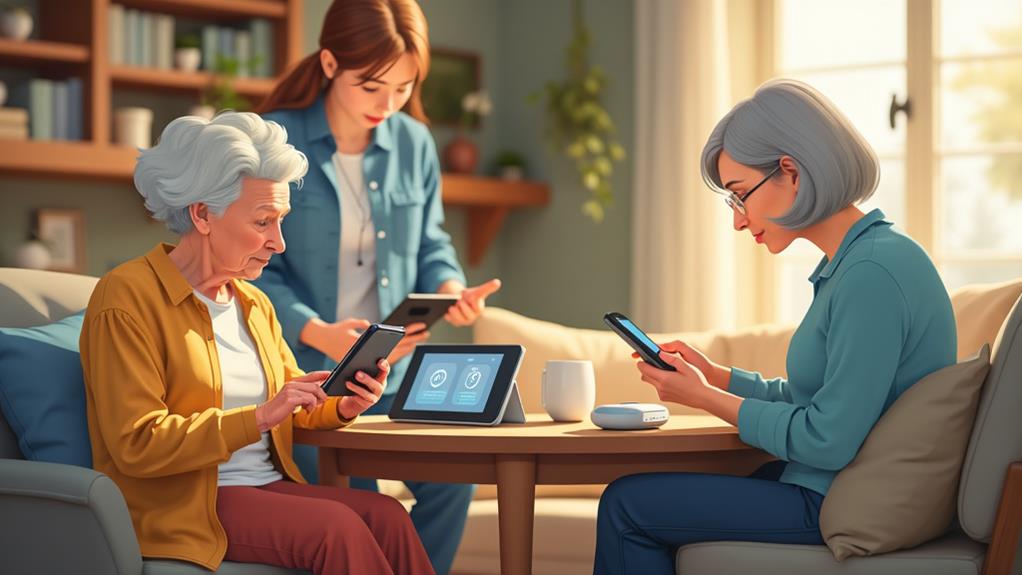
A noticeable shift toward technology adoption among senior citizens is transforming elder care. You've probably noticed that more senior citizens are using smartphones now than ever before. In fact, smartphone ownership among this group skyrocketed from just 18% in 2013 to a remarkable 61% in 2021. This trend isn't limited to phones; about 90% of senior citizens now own laptops or computers, reflecting significant internet usage and access to digital resources.
Telehealth has become a lifeline for many seniors, especially during the COVID-19 pandemic. Telehealth visits among those aged 70 and above surged from 4.6% to 21.1%, showcasing how virtual healthcare solutions are becoming essential for healthcare access. This reliance on digital health tools demonstrates an increasing comfort with technology for health management.
Moreover, senior citizens are more likely to engage with digital coaching platforms than their younger counterparts. This indicates not just a willingness, but an enthusiasm to use technology for better health outcomes. As you see, these technology adoption trends signify a broader acceptance and integration of digital health tools, ultimately enhancing the quality of elder care and making it more accessible and efficient.
Emerging Innovations
In the domain of emerging innovations in elderly care technology, wearable devices are truly making waves. These gadgets, like fitness trackers, monitor essential signs and physical activity, providing real-time data. This data can alert caregivers to potential health issues before they escalate, guaranteeing timely intervention. Alongside these, smart home devices are improving safety and comfort. Voice-activated assistants and environmental sensors allow seniors to control their living space, fostering independence and peace of mind.
Telemedicine technology has also surged, especially during the COVID-19 pandemic. With telehealth visits for seniors aged 70+ increasing from 4.6% to 21.1%, remote access to healthcare has become more accessible. This innovation guarantees that healthcare services are within reach, without the need for frequent travel.
Additionally, automation and cloud-based systems are transforming personalized care. They improve patient data management, enabling care solutions to adapt to each senior's unique needs. Virtual reality experiences and interactive games are also being integrated into elderly care, providing cognitive stimulation and emotional comfort.
- Wearable devices: Track essential signs and physical activity.
- Smart home devices: Improve safety and independence.
- Telemedicine technology: Facilitate remote healthcare access.
These innovations collectively improve the quality of elderly care, making it more responsive and engaging.
Challenges in Tech Integration

Integrating technology into elderly care is fraught with several significant challenges. Initially, reimbursement issues hinder access to new technologies, making it tough for seniors to benefit from modern care solutions. The healthcare system's slow adoption rate additionally complicates matters, with many care facilities lacking the necessary infrastructure for effective technology integration. This slow pace creates a significant barrier to bringing advanced tools to those who need them most.
Accessibility concerns are another major challenge. Seniors often face mobility limitations and sensory limitations, which can impede the successful implementation of technology. Without intuitive design tailored to their needs, these tools can become unusable. Moreover, the lack of standardized protocols across different healthcare providers leads to inconsistent practices, making it harder to integrate new technologies seamlessly.
Proper training is also vital for effective technology use. Many systems fail to prioritize training, leaving care providers and seniors struggling to adapt. This neglect results in decreased adoption rates and underutilization of potentially beneficial innovations. Addressing these challenges requires a concerted effort to improve reimbursement policies, upgrade infrastructure, create intuitive designs, and establish standardized protocols. Only then can technology truly improve elderly care.
Future Trends in Senior Care
Looking ahead, the future of senior care promises notable advancements driven by groundbreaking technologies. You can expect intelligent home systems, equipped with sensors and devices, to improve safety and promote independence by providing customized solutions tailored to individual needs. Value-based care models will focus on enhancing health outcomes and reducing costs through the effective use of technology.
Predictive analytics and artificial intelligence will play vital roles in identifying health issues early on, enabling timely interventions and personalized care plans. This means better health management and fewer hospital visits for seniors. The rise of telehealth and remote monitoring will allow seniors to receive medical attention from home, greatly improving healthcare access and reducing barriers to care.
Digital health tools and platforms will empower older adults, fostering greater engagement in their health management and improving communication with healthcare providers. This kind of engagement guarantees that seniors are active participants in their own care, resulting in better comprehensive outcomes.
- Intelligent Home Systems: Improve safety and promote independence.
- Predictive Analytics: Early health issue identification and personalized care.
- Telehealth and Remote Monitoring: Improved healthcare access and reduced barriers.
Case Study: Sadie G. Mays Center
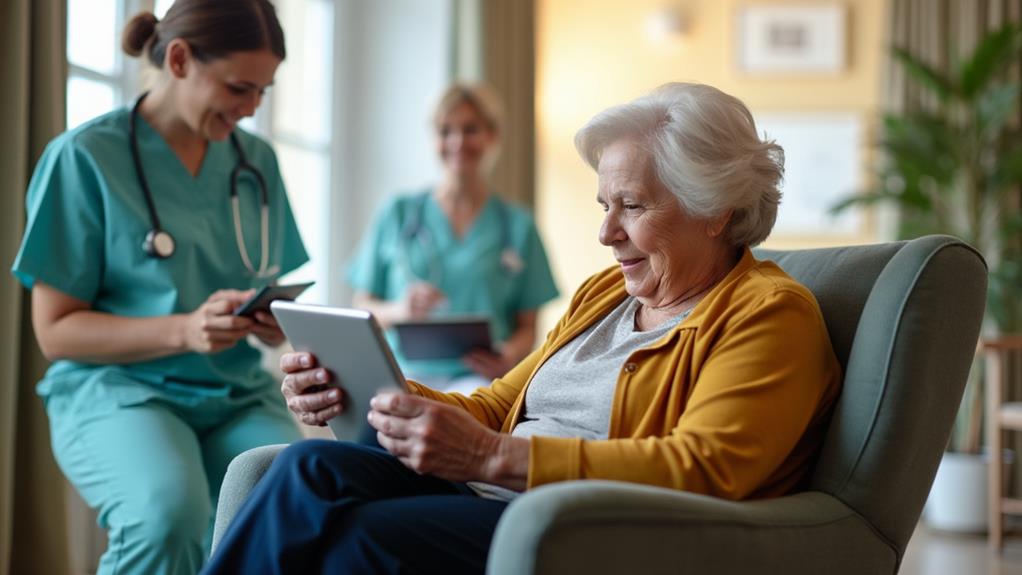
Ever wondered how cutting-edge technology can transform elderly care? At the Sadie G. Mays Health & Rehabilitation Center in Atlanta, technology plays a significant role in enhancing the quality of life for its 206 residents. Patient monitoring is transformed with telemedicine solutions, allowing caregivers to remotely track health conditions and intervene promptly when issues arise.
The center employs advanced health monitoring systems that continuously track essential signs and activity levels. This proactive approach guarantees that potential health problems are identified early, enabling timely and effective treatment. Personalized care plans are a cornerstone of the Sadie G. Mays Center, created using data analytics to tailor rehabilitation and therapy sessions to each resident's unique needs and progress.
Communication tools at the center, such as video calling platforms, foster engagement by keeping residents connected with their family and friends. This not only improves mental well-being but also helps maintain significant social bonds. By integrating these technologies, the Sadie G. Mays Center sets a benchmark in elderly care, demonstrating how modern innovations can provide thorough, personalized, and compassionate care for the elderly.