The Top Health Benefits of Wheatgrass You Need to Know

When you think about enhancing your health, wheatgrass might not be the primary thing that comes to mind, but it should be. This green powerhouse is packed with chlorophyll, antioxidants, vitamins, and amino acids, offering numerous benefits for your well-being. It can help lower cholesterol, manage blood sugar, and reduce inflammation. Additionally, the potential cancer-fighting properties of wheatgrass are significant. So, how can you incorporate this superfood into your daily routine to start reaping these benefits? There's much more to explore.
Nutritional Profile
Wheatgrass is a nutritional powerhouse, rich in essential vitamins, minerals, and amino acids. It contains approximately 70% chlorophyll, which not only gives it its vibrant green color but also enhances its detoxifying properties. This superfood is loaded with nutrients that are crucial for your body's health. A 100ml serving provides 17 calories, 60mg of iron, and 40mg of vitamin C, along with significant amounts of vitamins A, E, and various B vitamins.
Beyond vitamins, wheatgrass is an excellent source of dietary fiber, promoting digestive health and regular bowel movements. It contains 17 amino acids, including 8 that are essential for the body, making it a valuable protein source, especially for those on plant-based diets. Its mineral content is equally impressive, featuring calcium, magnesium, selenium, and potassium, which support overall health and bodily functions.
Incorporating wheatgrass into your diet can offer numerous health benefits. Its rich composition of vitamins, minerals, protein, and dietary fiber ensures that your body receives the essential nutrients it needs for optimal functioning.
Antioxidant Properties
Wheatgrass stands out not only for its impressive nutritional profile but also for its potent antioxidant properties, which can significantly enhance your health. The antioxidants in wheatgrass, such as vitamins A, C, and E, play a crucial role in combating oxidative stress by neutralizing free radicals. This protective action helps safeguard your cells from damage, thereby supporting overall health.
Wheatgrass is particularly rich in chlorophyll, the compound responsible for its vibrant green color, which also serves as a powerful antioxidant. Chlorophyll aids in detoxification, further helping to reduce oxidative stress within your body.
Another notable antioxidant in wheatgrass is glutathione. Renowned for its anti-inflammatory properties and its ability to boost the immune response, glutathione helps your body defend against various health issues. Regular consumption of wheatgrass can lower the risk of chronic diseases by enhancing your body's antioxidant defenses and scavenging harmful free radicals.
Key Benefits of Wheatgrass Antioxidants
- Combat Oxidative Stress: Neutralize harmful free radicals.
- Support Detoxification: Chlorophyll aids in cleansing the body.
- Reduce Inflammation: Glutathione helps manage inflammation.
- Amplify Immune Response: Strengthen your body's natural defenses.
Incorporating wheatgrass into your diet can substantially enhance your health by leveraging its robust antioxidant properties.
Cancer-Fighting Potential

Wheatgrass, rich in antioxidants, shows significant potential in combating cancer cells and alleviating the side effects of conventional cancer treatments. The antioxidants in wheatgrass help counteract oxidative stress, a key contributor to cancer development. Research indicates that wheatgrass can reduce the proliferation of mouth cancer cells by 41% and leukemia cells by 65% within three days of treatment.
The chlorophyll in wheatgrass, structurally similar to hemoglobin, can enhance oxygen delivery to cells, crucial for maintaining cellular health, especially during chemotherapy. Additionally, wheatgrass juice may help mitigate chemotherapy side effects and boost bone marrow function, thereby strengthening the immune system during treatment.
Enzymes in wheatgrass can also prevent oxidative DNA damage, adding to its cancer-fighting properties. While these findings from lab studies are promising, more human research is needed to fully understand wheatgrass's benefits in cancer treatment. Nonetheless, existing evidence suggests that incorporating wheatgrass into your diet could support your body's natural defenses and improve overall health during cancer treatment.
Heart Health
Wheatgrass offers notable benefits for heart health, complementing its cancer-fighting properties. Studies indicate that wheatgrass can lower total cholesterol and LDL cholesterol levels, similar to the effects of atorvastatin, a widely used medication. This positions wheatgrass as a natural option for maintaining healthy cholesterol levels. Additionally, research involving rabbits has shown that wheatgrass can improve HDL cholesterol levels over a 10-week period, demonstrating its potential to enhance good cholesterol.
Wheatgrass is rich in chlorophyll and flavonoids, which contribute to its high antioxidant activity. These antioxidants combat oxidative stress, a significant factor in cardiovascular diseases. By neutralizing free radicals, wheatgrass supports overall heart health and reduces the risk of heart-related issues.
Moreover, regular consumption of wheatgrass may help reduce inflammation, a key element in the development of heart disease. Although more research is needed to confirm these effects in humans, initial findings are promising.
In summary, wheatgrass can benefit your heart by:
- Lowering total and LDL cholesterol levels
- Increasing HDL cholesterol levels
- Combating oxidative stress with its high antioxidant content
- Reducing inflammation linked to heart disease
Incorporating wheatgrass into your diet could be a simple and effective way to support cardiovascular health.
Blood Sugar Control

Wheatgrass has shown promise in regulating blood sugar levels, particularly in animal studies. Research indicates a significant decrease in blood sugar levels in diabetic rats treated with wheatgrass, along with modified enzyme levels that suggest wheatgrass's potential role in diabetes management. While these findings are encouraging, more human studies are needed to confirm wheatgrass's effectiveness in blood sugar control.
In addition to its direct effects, wheatgrass's potential for aiding weight loss can indirectly support blood sugar management. This is largely due to thylakoids, compounds in wheatgrass that increase feelings of satiety. By enhancing satiety, thylakoids may help you feel full longer after high-carb meals, potentially reducing spikes in blood sugar levels. This makes wheatgrass a promising addition to a diabetes-friendly diet.
It's important to note that while animal studies provide valuable insights, further research is essential to confirm these benefits in humans. Until then, incorporating wheatgrass into your diet could be a proactive step for better blood sugar management, alongside other healthy lifestyle choices.
Anti-Inflammatory Effects
Wheatgrass is a potent ally against chronic inflammation. Its high chlorophyll content inhibits proteins that trigger inflammation, making it particularly effective for conditions like arthritis. Additionally, the antioxidants in wheatgrass help reduce oxidative stress, further combating inflammation.
Reducing Chronic Inflammation
Thanks to its significant anti-inflammatory properties, primarily from its high chlorophyll content, wheatgrass can help reduce chronic inflammation. Research has shown that wheatgrass is particularly effective against conditions like ulcerative colitis and arthritis. The chlorophyll in wheatgrass is a potent anti-inflammatory agent that helps alleviate symptoms associated with chronic inflammation.
Here's a closer look at how wheatgrass can help:
- Ulcerative Colitis: Studies suggest that regular consumption of wheatgrass can reduce symptoms in patients with this inflammatory bowel disease.
- Antioxidants: Wheatgrass is rich in antioxidants like flavonoids and vitamins A, C, and E, which combat oxidative stress and reduce chronic inflammation.
- Joint Health: Animal studies indicate that the anti-inflammatory effects of wheatgrass can support joint health and alleviate arthritis symptoms.
The combined effects of antioxidants and chlorophyll in wheatgrass work to decrease chronic inflammation, promoting overall well-being.
Inhibiting Inflammatory Proteins
Wheatgrass is a potent natural remedy for chronic inflammation, primarily due to its high chlorophyll content. Chlorophyll has been scientifically shown to suppress the expression of pro-inflammatory cytokines, thereby significantly reducing inflammation in the body. For example, a study on patients with ulcerative colitis found that wheatgrass juice substantially alleviated their symptoms by effectively modulating inflammatory pathways.
Additionally, wheatgrass is rich in antioxidants, critical in combating oxidative stress—a key factor in the development and progression of inflammatory diseases. By neutralizing free radicals, these antioxidants help reduce inflammation and protect cells from damage.
Animal studies further support the anti-inflammatory benefits of wheatgrass, suggesting its potential to alleviate inflammation in conditions similar to arthritis. This positions wheatgrass as a comprehensive aid in reducing inflammation and promoting overall health.
Key Points Summary
| Key Component | Effect |
|---|---|
| Chlorophyll | Suppresses pro-inflammatory cytokines |
| Antioxidants | Combat oxidative stress |
| Inflammatory Pathways | Modulates to reduce inflammation |
Incorporating wheatgrass into your diet can be a simple and effective strategy to manage chronic inflammation and enhance overall health.
Consumption Methods
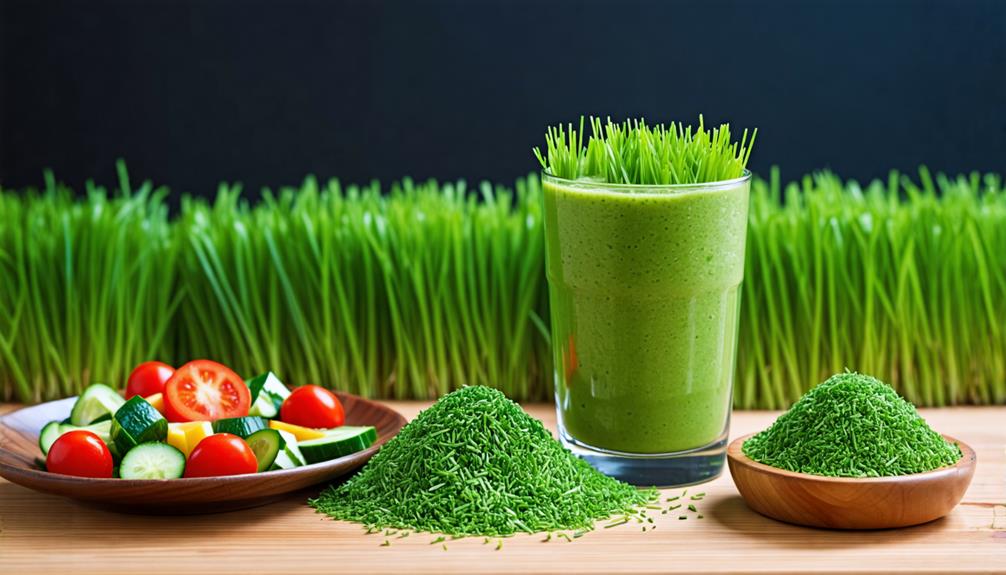
You have several options for consuming wheatgrass, whether you prefer fresh juice, powder, or capsules. Each method can be easily integrated into your daily routine. Let's explore how you can incorporate wheatgrass seamlessly into your diet.
Popular Intake Forms
When it comes to consuming wheatgrass, there are several popular methods to choose from, each offering unique benefits and convenience. Wheatgrass juice, typically consumed in 1-2 ounce servings, is a favorite choice for its nutrient density and significant health benefits. For those seeking versatility, wheatgrass powder can be easily added to smoothies, soups, salad dressings, and even desserts, enhancing the nutritive value of various recipes.
If the taste of fresh juice or powder isn't appealing, wheatgrass tablets or capsules offer a convenient, tasteless alternative that still delivers health benefits. These forms are ideal for those with busy lifestyles or anyone in need of a quick, easy option.
For those prioritizing freshness and quality, home-growing wheatgrass ensures a constant supply of this nutrient-rich ingredient. Freshly grown wheatgrass can be juiced and combined with strong flavors like pineapple or lemon to improve its taste.
Here are the popular intake forms:
- Fresh Juice: Concentrated source of nutrients.
- Powder Form: Versatile and easily added to various foods.
- Tablets or Capsules: Convenient and taste-free.
- Home-Growing: Ensures quality and freshness.
Integrating Wheatgrass Daily
Incorporating wheatgrass into your daily routine can be both seamless and beneficial. One of the simplest methods is by consuming wheatgrass juice daily, with a common serving size being 1-2 oz shots. This provides a quick, nutrient-dense boost as wheatgrass juice is rich in nutrients and chlorophyll, offering numerous health benefits.
For variety, you can add wheatgrass powder to your smoothies, juices, soups, or salad dressings. This not only enhances the flavor but also boosts the nutritional content of your meals. Fresh wheatgrass is available at health food stores, or you can grow it at home for convenient access.
To make the taste more palatable, mix wheatgrass with strong-flavored ingredients like pineapple or citrus to mask its grassy flavor. When starting, begin with small amounts to assess your tolerance and gradually increase your intake.
Integrating wheatgrass into your daily diet is straightforward and versatile, ensuring you can easily reap its health benefits. Whether in juice or powder form, wheatgrass is a valuable addition to your wellness routine.