Exploring the Antioxidant Power of Wheatgrass

Investigating the antioxidant power of wheatgrass reveals its remarkable ability to combat oxidative stress and protect cellular health. This potent plant, rich in phenolic compounds and bioactive elements, demonstrates significant free radical scavenging capabilities as it matures. Incorporating wheatgrass into your diet, whether through juice or powder, could enhance your overall well-being. But what precisely makes wheatgrass so effective, and how can it potentially aid in cancer prevention, inflammation reduction, and cholesterol management? These questions are crucial as we examine the scientific findings and practical applications of this green powerhouse.
Wheatgrass Nutritional Profile
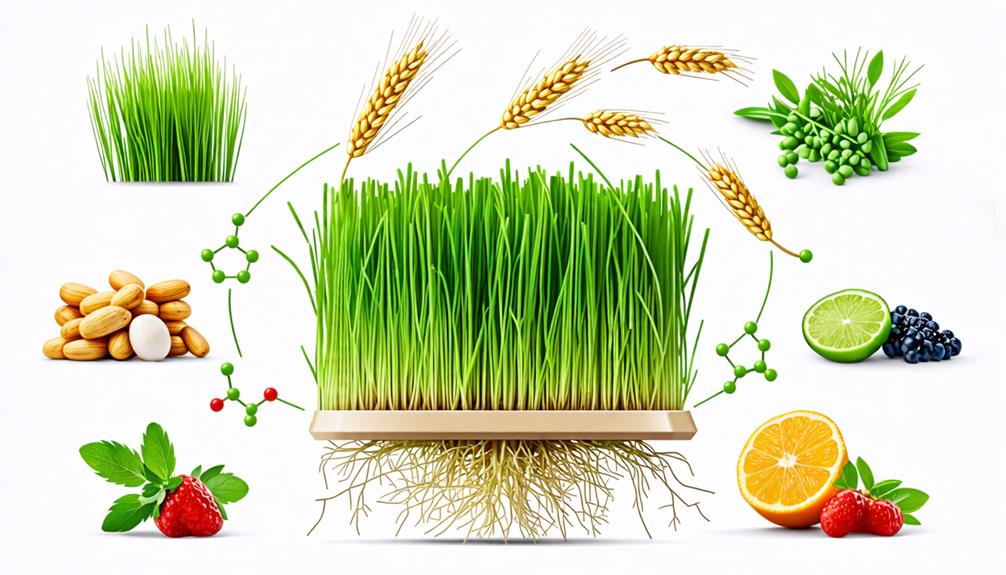
Wheatgrass is a nutrient-dense dietary supplement, harvested 7-10 days after planting, and is packed with essential vitamins, minerals, and antioxidants. Its high chlorophyll content gives it a vibrant green color and contributes to its health benefits. Wheatgrass is rich in vitamins A, C, E, K, and several B vitamins, as well as minerals such as calcium, magnesium, and iron.
One of the key features of wheatgrass is its impressive antioxidant properties. It contains high levels of antioxidants, including phenolic compounds and flavonoids, which help neutralize free radicals and may reduce the risk of chronic diseases.
In addition to vitamins and minerals, wheatgrass provides a substantial amount of dietary fiber, including compounds like lignin and oligosaccharides that support digestive health and regularity. However, the nutritional value can vary based on growth conditions such as soil nutrients, pH, light, and temperature.
Incorporating wheatgrass into your diet can enhance overall nutrition and effectively combat oxidative stress.
Health Benefits of Wheatgrass
You'll be impressed by the health benefits of wheatgrass, starting with its nutrient-rich profile that supports overall wellness. Its high fiber content aids in digestion, promoting a healthy and regular gut. Additionally, wheatgrass may help cancer patients by potentially reducing chemotherapy toxicity and enhancing treatment effectiveness.
Nutrient-Rich Superfood
Wheatgrass is a nutrient-rich superfood loaded with essential vitamins and antioxidants that boost health and vitality. Incorporating wheatgrass juice into your diet allows you to benefit from its potent antioxidant properties, offering substantial health advantages. It is particularly noted for its ability to neutralize free radicals, thereby protecting cells from oxidative damage and promoting overall well-being.
Key Nutrients and Their Benefits in Wheatgrass:
| Nutrient | Health Benefit |
|---|---|
| Vitamin A | Supports vision and immune function |
| Vitamin C | Enhances collagen production and immunity |
| Dietary Fiber | Aids digestion and helps regulate cholesterol |
| Vitamin E | Shields cells from oxidative stress |
| Vitamin K | Crucial for blood clotting and bone health |
| Chlorophyll | Assists in detoxification and boosts energy |
Wheatgrass's dietary fiber content supports digestive health and can help lower LDL cholesterol levels, making it a valuable addition for those managing cholesterol and aiming to improve heart health.
Incorporating wheatgrass into your diet delivers numerous health benefits, from bolstering the immune system to enhancing cardiovascular health. Try wheatgrass juice and experience its potent health-boosting properties.
Digestive Health Boost
Harnessing the digestive health benefits of wheatgrass can significantly improve gut function and overall well-being. Rich in dietary fiber, wheatgrass promotes digestive health by enhancing bowel regularity and maintaining a healthy gut environment.
Wheatgrass is also loaded with antioxidants, including phenolic acids, which combat free radicals and reduce inflammation in the gastrointestinal system. This is especially beneficial for those with conditions like ulcerative colitis, as the anti-inflammatory properties of wheatgrass can help soothe the digestive tract.
Furthermore, wheatgrass boasts a high chlorophyll content, which supports detoxification processes in the digestive tract by aiding in the elimination of harmful toxins. The easily digestible amino acids, carbohydrates, and lipids in wheatgrass also contribute to a balanced and healthy gut.
Incorporating wheatgrass into your diet, whether through smoothies or supplements, is a simple and effective step towards better digestive health. Its health-boosting properties are undeniable, providing your digestive system with the support it needs.
Cancer Support Potential
Harnessing the potential of wheatgrass extends beyond its digestive health benefits to its potent anti-cancer properties, contributing significantly to overall well-being. Wheatgrass contains bioactive compounds such as phenolic acids and alkylresorcinols, which exhibit powerful anti-inflammatory and antioxidant effects. These compounds play a critical role in targeting cancer cells by inducing apoptosis and inhibiting the proliferation of cancer cells, notably lung cancer cells, through pathways like ERK 1/2 and reducing HIF-1α expression.
In addition, wheatgrass enhances the therapeutic potential of chemotherapy agents like carboplatin and paclitaxel. It not only boosts their effectiveness but also mitigates the associated toxicity, making cancer treatments more manageable. This dual action is particularly advantageous for treating pancreatic, lung, and breast cancers.
Beyond its direct anti-cancer effects, wheatgrass supports the immune system, helping to alleviate the side effects of cancer treatments and improve overall health. Clinical studies suggest that wheatgrass may enhance immune function, providing essential support during therapy.
| Benefit | Description |
|---|---|
| Anti-cancer Properties | Induces apoptosis and inhibits cancer cell proliferation |
| Chemotherapy Support | Enhances effectiveness and reduces toxicity of chemotherapy |
| Immune System Support | Boosts immune function and mitigates treatment side effects |
Leveraging wheatgrass as part of a comprehensive cancer support strategy can offer meaningful benefits, enhancing treatment outcomes and improving quality of life.
Antioxidant Properties

Have you ever wondered why wheatgrass is celebrated for its potent antioxidant properties? The secret lies in its high total phenolic content, which is crucial for its free radical scavenging abilities. This allows wheatgrass to neutralize harmful molecules that can cause cellular damage. Specifically, wheatgrass extracts rich in phenolic acids are highly effective in combating lipid peroxidation, a process that can harm cell membranes.
Scientific assays like DPPH (2,2-diphenyl-1-picrylhydrazyl) and FRAP (Ferric Reducing Antioxidant Power) demonstrate that wheatgrass extracts significantly inhibit lipid peroxidation and exhibit high ferric reducing antioxidant power. These properties are especially evident when wheatgrass is cultivated under optimal conditions. As wheatgrass matures, its ethanol extracts show increased DPPH scavenging activity, highlighting the importance of growth duration for maximizing its antioxidant benefits.
The total phenolic content in wheatgrass directly correlates with its antioxidant potential; higher concentrations of these phenolic compounds provide better protection against oxidative damage. Therefore, consuming wheatgrass offers a potent source of antioxidants that can help protect your cells from oxidative stress.
Cancer Prevention Potential
Wheatgrass shows promise in cancer prevention, benefiting multiple types of cancer, including pancreatic, lung, breast, and ovarian. Its antioxidant properties play a crucial role in this process. Bioactive compounds in wheatgrass, such as phenolic acids and specific compounds like YWG and WG1, help combat oxidative stress and support immune function.
During chemotherapy, wheatgrass can serve as an adjunct therapy. It helps reduce drug toxicity and improve treatment efficacy. Research indicates that wheatgrass can inhibit the proliferation of cancer cells, including A549 human lung adenocarcinoma cells, especially under hypoxic conditions. Additionally, it promotes apoptosis, the programmed death of cancer cells.
Furthermore, wheatgrass has been shown to enhance the activity of chemotherapy agents against both cisplatin-sensitive and resistant ovarian cancer cell lines. This suggests its potential to improve treatment outcomes for ovarian cancer patients. Incorporating wheatgrass into your routine could harness its bioactive compounds to not only prevent cancer but also support conventional treatments and enhance overall health.
Anti-inflammatory Effects

Wheatgrass not only shows promise in cancer prevention but also offers significant anti-inflammatory benefits that enhance overall health. Its rich bioactive compounds, such as phenolic acids and alkylresorcinols, play a pivotal role in reducing inflammation-related conditions. These compounds effectively combat oxidative stress, a key factor linked to chronic inflammation and various diseases.
Here's a succinct overview of how wheatgrass works:
| Benefit | Mechanism |
|---|---|
| Reduces Inflammation | Inhibits pro-inflammatory markers and cytokines |
| Detoxification | Enhances Phase II detoxification enzymes |
| Fights Oxidative Stress | Antioxidant properties reduce cellular damage |
| Increases Immune Function | Boosts overall immune response |
The antioxidant properties of wheatgrass help mitigate oxidative stress, thereby reducing inflammation. Research indicates that wheatgrass enhances the synthesis of Phase II detoxification enzymes, crucial for neutralizing harmful substances and maintaining cellular health. This further contributes to reducing inflammation.
Regular consumption of wheatgrass is also linked to improved immune function. By managing inflammation, wheatgrass can help alleviate symptoms of inflammatory diseases, thereby enhancing general well-being. Incorporating wheatgrass into your diet can significantly impact your daily health and function.
Digestive Health Support
To support digestive health, incorporating wheatgrass into your diet can be highly beneficial due to its rich dietary fiber and bioactive compounds. The dietary fiber in wheatgrass enhances gut health by promoting regularity and increasing stool bulk, which can help alleviate common gastrointestinal issues like constipation.
The bioactive compounds in wheatgrass, such as lignin and oligosaccharides, further support gastrointestinal functioning. These compounds can reduce symptoms of digestive disorders, making your digestive system more efficient and comfortable. Additionally, wheatgrass contains amino acids and enzymes that contribute to metabolic balance, aiding in various bodily functions essential for maintaining digestive health.
Here are three key benefits of wheatgrass for digestive health:
- Gut Health: Wheatgrass promotes gut health and regularity through its high fiber content.
- Symptom Relief: Its bioactive compounds can help reduce symptoms of digestive disorders, such as ulcerative colitis.
- Antioxidant Protection: The antioxidant properties of wheatgrass protect the gastrointestinal tract from oxidative stress, supporting overall well-being.
Cholesterol Management
Incorporating wheatgrass into your diet can significantly aid in lowering LDL cholesterol levels and promoting cardiovascular health. The bioactive compounds in wheatgrass, such as phenolic acids, help improve your lipid profile by reducing serum triglycerides and managing cholesterol levels effectively. This is crucial for preventing hyperlipidemia and supporting overall heart health.
Research indicates that the antioxidant properties of wheatgrass play a key role in cholesterol management. These antioxidants help combat oxidative stress, which can otherwise elevate cholesterol levels and increase health risks. By including wheatgrass in your diet, you can leverage these powerful compounds to maintain healthier cholesterol levels.
Animal studies suggest that wheatgrass aids in regulating cholesterol, highlighting its potential as a dietary supplement for individuals with high cholesterol. Although further human studies are needed, current evidence supports wheatgrass as a beneficial measure for improving metabolic processes related to cholesterol management. Therefore, regular intake of wheatgrass could serve as a natural intervention for better lipid control and cardiovascular health. If you're looking to manage your cholesterol levels naturally, wheatgrass might be a valuable addition to your diet.
Methods of Consumption
Considering wheatgrass's impressive benefits for cholesterol management, let's explore various methods of consumption that can help you easily incorporate this superfood into your diet. One popular way to enjoy wheatgrass is through its juice form. A typical serving size ranges from 1 to 2 ounces, providing a concentrated source of vitamins and minerals. Fresh wheatgrass juice is readily available in grocery stores, or you can grow your own at home for a convenient and cost-effective option.
If you prefer a more versatile approach, wheatgrass powder is an excellent alternative. It can be effortlessly added to numerous recipes, enhancing their nutritional content. Here are three ways to incorporate wheatgrass powder into your meals:
- Smoothies: Blend wheatgrass powder into your morning smoothie for a quick dose of antioxidants.
- Salads and Dips: Sprinkle the powder on salads or mix it into dips for an extra nutritional boost.
- Soups and Desserts: Stir wheatgrass powder into soups or even desserts to enrich their health benefits.
Additionally, you can mix wheatgrass powder into cocktails or mocktails, making your drinks both flavorful and nutritious. These methods ensure you maximize the health benefits of wheatgrass.
Research Findings
Research underscores wheatgrass's remarkable antioxidant activities, especially under optimal growth conditions. Various assays, such as FRAP and DPPH, demonstrate its strong free radical scavenging abilities. Bioactive compounds, including phenolics and flavonoids, significantly enhance its antioxidant potential.
Antioxidant Assay Results
Wheatgrass extracts have demonstrated significant antioxidant activity, with the highest FRAP values observed in both ethanol and aqueous extracts under optimal growth conditions. This research delves into several important assays, showcasing wheatgrass's potential.
Firstly, the DPPH assay reveals that ethanol extracts exhibit increasing free radical scavenging activity over time, particularly in nutrient-rich conditions. This indicates that wheatgrass can effectively neutralize harmful free radicals.
Secondly, the ORAC values for wheatgrass extracts are impressive, reaching 39.9 for aqueous and 48.2 for ethanol extracts by day 10. These values surpass those of many natural extracts and vegetables, indicating robust antioxidant activity.
Lastly, significant inhibition of lipid peroxidation was observed in rat liver mitochondria. This suggests that wheatgrass can protect cells from oxidative damage, which is crucial for maintaining cellular health.
In summary, wheatgrass is supported by scientific evidence, not just a health fad. Here's a concise recap:
- Free Radical Scavenging: Ethanol extracts show high activity.
- ORAC Values: High values indicate strong antioxidant activity.
- Lipid Peroxidation: Demonstrates protective effects against oxidative damage.
Bioactive Compounds Analysis
Building on the impressive antioxidant results, let's investigate the bioactive compounds in wheatgrass that contribute to its health-promoting properties. Wheatgrass is rich in bioactive compounds such as phenolic acids and alkylresorcinols, which are crucial for its classification as a 'functional food.' These compounds are directly linked to its strong antioxidant activity.
Research findings indicate that the total phenolic content in wheatgrass extracts correlates with its antioxidant potential. For example, aqueous extracts on day 15 under optimal growth conditions recorded 0.463 mmol ascorbic acid equivalents, while ethanol extracts reached 0.573 mmol Trolox equivalents. These values underscore wheatgrass's remarkable capacity to combat oxidative stress.
The DPPH assay results further emphasize this, showing that ethanol extracts of wheatgrass exhibit increasing radical scavenging capabilities as the growth duration extends. This indicates its significant potential as a potent antioxidant source. Additionally, wheatgrass extracts effectively inhibit lipid peroxidation in rat liver mitochondria, highlighting their ability to protect cellular membranes from oxidative damage.
Practical Applications
Incorporating wheatgrass into your daily routine can significantly boost your antioxidant intake and support overall health. Wheatgrass extracts, rich in total phenolic content, exhibit potent antioxidant activity that helps combat oxidative stress, protecting cells from damage and enhancing your nutritional profile. The protective effects of these antioxidants make wheatgrass a valuable addition to your diet.
To maximize the benefits of wheatgrass, consider the following practical applications:
- Fresh Juice: Begin your day with a shot of fresh wheatgrass juice. This antioxidant-rich drink can help reduce oxidative stress and provide a natural energy boost.
- Powdered Supplements: For convenience, powdered wheatgrass supplements can be easily mixed into smoothies, yogurt, or water, offering a quick, nutrient-dense option.
- Culinary Uses: Enhance your meals by adding wheatgrass powder to soups, salads, or baked goods, boosting their phenolic content and antioxidant potential.