What to Expect From Senior Rehabilitation Services

When you opt for senior rehabilitation services, expect personalized care plans designed to help regain independence and improve quality of life after hospitalization or surgery. You'll encounter physical therapy for enhancing mobility, occupational therapy for daily activities, and speech therapy for communication. These services are offered in different settings like inpatient facilities, outpatient clinics, and even at home. Commonly addressed conditions include post-surgical recovery, strokes, joint replacements, and chronic illnesses. Costs and service quality can fluctuate, but professional guidance guarantees the best recovery path. To uncover the full extent of what these services offer, continue exploring the details.
Overview and Importance
Senior rehabilitation services play a crucial role in helping elderly patients regain independence and improve their quality of life after hospitalization. When you or a loved one face challenges post-surgery, illness, or chronic conditions, these services offer a lifeline through individualized care plans tailored to specific recovery needs. Senior rehabilitation typically includes physical therapy to boost mobility and strength, occupational therapy to help with daily living activities, and speech therapy to improve communication and swallowing.
Whether through inpatient facilities for intensive care or outpatient services that allow you to remain at home, senior rehabilitation addresses multiple health challenges effectively. Inpatient facilities provide a structured environment with round-the-clock care, while outpatient services offer flexibility and convenience for those with less severe conditions. Both settings focus on thorough recovery, ensuring you receive the appropriate therapy for your condition.
Common conditions requiring senior rehabilitation include musculoskeletal issues, neurological conditions like strokes, and recovery from cardiac events. By accessing these skilled rehabilitation services, you greatly improve your chances of a successful recovery. Higher-rated facilities often deliver better patient satisfaction and recovery rates, underscoring the importance of choosing the right rehabilitation program to improve your quality of life.
Types of Rehabilitation Services
In regard to rehabilitation services, a holistic approach guarantees that elderly patients receive the care they need to regain their independence. You'll find that rehabilitation encompasses several types of therapy to address different needs. Physical therapy is essential for enhancing mobility, strength, and balance, and it helps manage pain post-injury or surgery. Through targeted exercises and activities, physical therapy aims to restore function and prevent further injury.
Occupational therapy focuses on helping older adults regain the skills necessary for daily living activities like dressing, cooking, and bathing. These therapists work with patients to develop strategies and use adaptive equipment that makes daily tasks easier.
Speech therapy addresses communication challenges and cognitive issues, which can be particularly beneficial for patients recovering from strokes or neurological conditions. This form of therapy helps improve speech, language, and swallowing functions.
Rehabilitation services can be provided in different settings, including inpatient rehabilitation facilities, outpatient rehab clinics, and even in-home therapy. Many rehabilitation centers are equipped with advanced therapeutic equipment and offer specialized programs tailored to individual recovery needs. These all-encompassing recovery options guarantee that seniors receive the best possible care to promote independence and improve their quality of life.
Common Conditions
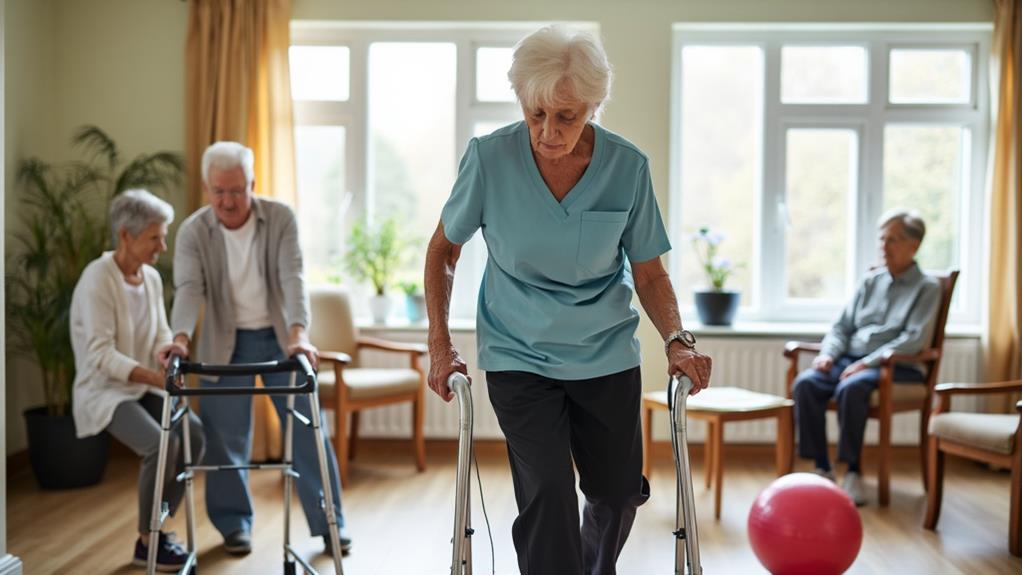
Understanding the variety of rehabilitation services available is just the initial step. When considering senior rehab centers, it's crucial to know the common conditions that might require these services. Musculoskeletal problems, like joint replacements, often necessitate physical therapy to help you regain mobility and strength. If you've experienced a neurological condition such as a stroke or Parkinson's disease, rehabilitation services can greatly improve your functionality and daily living skills.
Cardiac events, including heart attacks, may also lead you to seek rehab services focused on restoring cardiovascular health and physical endurance. Chronic conditions, such as arthritis and osteoporosis, can benefit from ongoing therapy that manages pain and boosts your quality of life through targeted mobility exercises. Post-surgery recovery is another essential area where rehabilitation plays a crucial role. After considerable medical procedures, these services can help you adjust to home life and regain your independence.
Service Options and Locations
When exploring rehabilitation services for seniors, it's essential to evaluate the diverse options and locations available to best suit individual needs and preferences. You have several choices, including skilled nursing facilities, assisted living communities, and in-home rehabilitation services. Each option offers unique benefits and caters to different levels of care and support.
A skilled nursing facility provides extensive 24-hour care and rehabilitation services. These facilities are staffed by healthcare professionals who deliver rehab therapy and medical care in a structured environment. It's worth noting that the median monthly cost for a semi-private room is approximately $8,669 and $9,700 for a private room.
Alternatively, an assisted living community might be the right fit if you prefer a more home-like setting. These communities typically offer visiting rehabilitation services, with the majority providing physical, occupational, and speech therapy. The median cost is around $5,000 per month.
If staying at home is a priority, in-home rehabilitation services enable you to receive therapy services from licensed professionals in the comfort of your own home. This option has a median cost of about $6,300 per month. Remember, proximity to family and friends can greatly improve emotional support and recovery outcomes.
Planning and Support

Effective planning and robust support are crucial components for a successful senior rehabilitation process. You need to start by evaluating the specific therapies required post-discharge to guarantee they align with the patient's recovery needs. It's essential to discuss these needs with healthcare professionals who can guide you through the best practices and necessary steps for a smooth changeover.
Don't forget to inquire about insurance coverage for rehabilitation services. Medicare and other insurances often cover certain therapies, but not all facilities or services may be included. Understanding what's covered can prevent unexpected expenses.
Next, examine the safety of the home environment before discharge. A safe environment greatly impacts recovery outcomes by reducing the risk of injury. You might need to make modifications to guarantee that your home is prepared for the patient's return.
Establish a clear recovery timeline with healthcare professionals to set realistic expectations. This timeline will help keep everyone on track and focused on achievable goals.