How to Create a Safe Home Environment for Seniors
To create a safe home environment for seniors, start with a home safety assessment to identify hazards and modify high-risk areas. Install grab bars and non-slip mats in bathrooms and guarantee pathways are clear and well-lit. Use assistive devices like canes and walkers to prevent falls, and regularly review your safety measures. Create an emergency plan with clear routes and accessible emergency numbers. Upgrade interior elements, like switching to walk-in showers and adding motion-sensor lighting. Investigate financial assistance programs for safety modifications. Smart precautions can greatly improve safety and comfort for seniors in their homes. Learn even more practical steps forward.
Home Safety Assessment
Conducting a home safety assessment is vital for creating a secure environment for seniors. To start, use a thorough home safety checklist to systematically assess your home. This checklist helps you identify hazards and pinpoint necessary modifications to reduce the risk of accidents. Prioritize high-risk areas, like bathrooms, where falls are more likely to occur. Simple changes, such as installing grab bars and non-slip mats, can make a notable difference.
As you assess your home, look closely at each room. Confirm that pathways are clear of obstacles, lighting is adequate, and furniture is stable. Regularly reviewing and updating these safety measures is imperative. As seniors' needs change, your home should adapt to maintain their independence and comfort.
Engaging professionals for a home safety assessment can also provide valuable insights. These experts can recommend tailored solutions based on the specific needs of seniors living at home. By following these home safety tips, you can create a safer living environment that supports the well-being of your loved ones. Remember, taking proactive steps to assess your home can considerably reduce the risk of accidents and improve overall safety.
Fall Prevention Strategies
Falls are a vital concern for seniors, making it important to implement effective fall prevention strategies. Start by addressing common fall risks around the home. Begin with the bathroom, where installing grab bars and securing non-slip mats in tubs can make a tremendous difference. Since around 80% of falls occur in bathrooms, these simple modifications can greatly improve home safety.
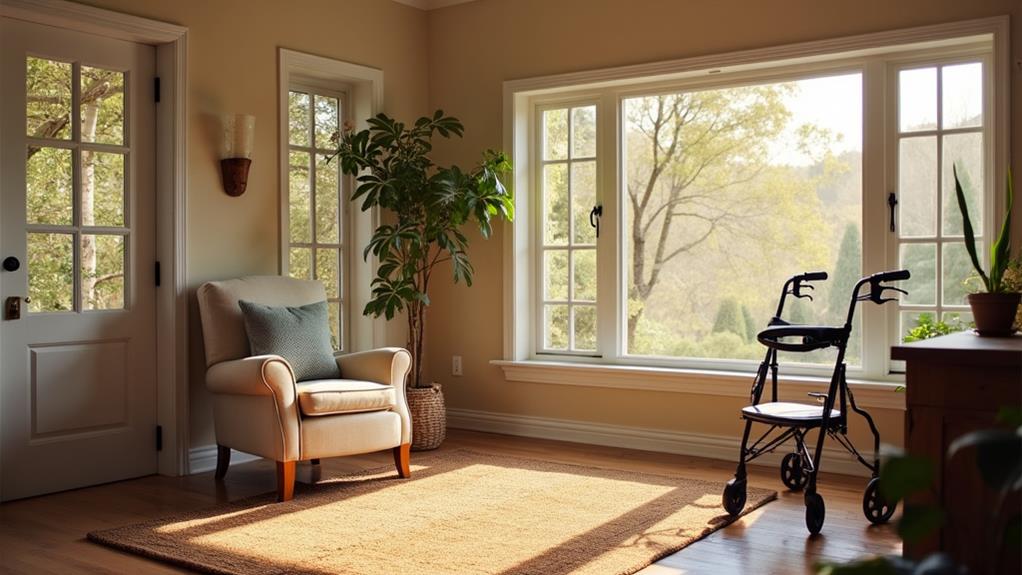
Another important strategy is to utilize assistive devices like canes or walkers. These tools provide the necessary support to improve stability and balance, greatly reducing the likelihood of falls. Moreover, conducting regular home assessments to identify and eliminate trip hazards, such as clutter and loose rugs, is essential. Studies show that making these home modifications can reduce falls by up to 50%.
Encouraging seniors to engage in balance and strength training exercises is another effective way to prevent falls. Regular exercise can improve physical stability, reducing fall risk by approximately 30%. By focusing on these fall prevention strategies, you're actively contributing to a safer home environment for seniors, helping to prevent falls and promote general well-being.
Emergency Preparedness
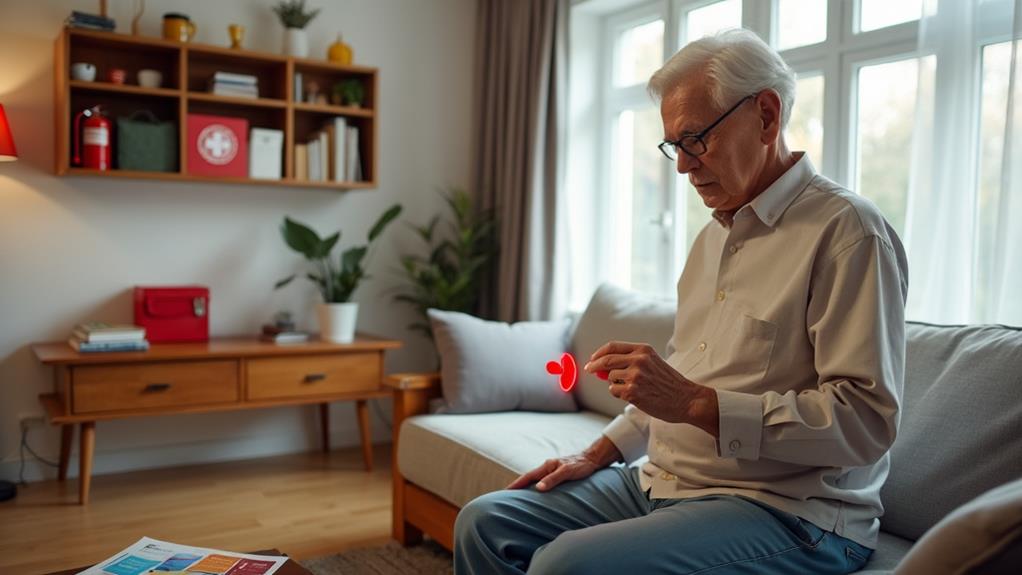
Preparing a senior's home for emergencies is fundamental for their safety and peace of mind. Start by creating a personalized emergency plan. This plan should detail evacuation routes and safe meeting points, so seniors know exactly what to do during different emergency scenarios. Regularly review and practice this plan to make certain everyone is familiar with the procedures.
Next, establish an emergency phone tree. This network should include family members and caregivers to guarantee swift communication during a crisis. Having a clear line of communication helps everyone stay informed and respond quickly. Keep emergency numbers, including 911 and Poison Control (1-800-222-1222), in large print near every phone for easy access.
Medical alert devices are another important component. These devices provide 24/7 monitoring and immediate assistance, especially significant for seniors living alone. They can offer peace of mind knowing help is just a button press away.
Here are three key steps to improve emergency preparedness:
- Create and practice an emergency plan with evacuation routes and safe meeting points.
- Establish an emergency phone tree involving family and caregivers for swift communication.
- Utilize medical alert devices to guarantee immediate assistance is available at all times.
Interior Modifications
After establishing a solid emergency preparedness plan, it's important to focus on modifying the interior of the home to improve safety and accessibility for seniors. Start by installing grab bars and nonslip mats in the bathroom. These simple additions can drastically reduce the risk of falls, a common hazard for seniors.
Next, improve the lighting throughout the home. Use LED bulbs for brighter, more energy-efficient light, and consider adding motion-detection lights in high-risk areas like stairways and hallways. Good lighting is essential for improving visibility and preventing accidents.
For seniors using wheelchairs or walkers, widening doorways and hallways can make a huge difference. This modification guarantees they can move freely and comfortably within their home. In the bathroom, replacing traditional bathtubs with walk-in showers removes the dangerous step-over obstacle, making bathing safer and more manageable for those with mobility challenges.
Specific Safety Areas
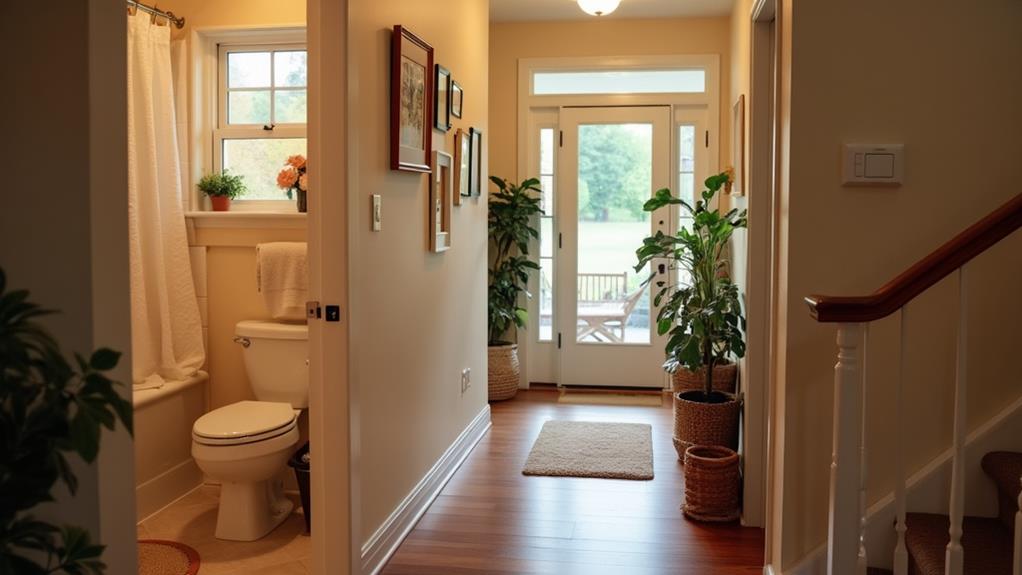
When creating a safe home environment for seniors, it's crucial to focus on specific safety areas to minimize risks and improve general well-being. Start with bathroom safety, as falls here can be particularly hazardous. Install grab bars near the shower and toilet, and use non-slip mats to prevent slipping. Furthermore, consider incorporating a shower chair or bench to provide extra support during bathing.
Next, address trip hazards in living areas. Securing area rugs and verifying walkways are clear of furniture and obstacles can greatly reduce the risk of falls. Regularly inspect the home to confirm nothing obstructs the pathways seniors use frequently.
Finally, improve safety in the kitchen and other high-risk zones by taking a few precautionary steps. Make certain smoke and carbon monoxide detectors are functional and placed strategically, especially near cooking areas and bedrooms. This provides extra safety by alerting you to potential dangers like fires or gas leaks.
Here's a quick checklist to verify you've covered these areas:
- Bathroom Safety: Install grab bars, non-slip mats, and use shower chairs.
- Trip Hazards: Secure area rugs and clear walkways.
- Extra Safety: Regularly check smoke and carbon monoxide detectors.
Financial Assistance
Securing financial assistance for home modifications can make a significant difference in creating a safe environment for seniors. Home improvement grants offer one-time financial support for safety projects, ensuring that seniors can mature in place comfortably. By tapping into these resources, you can make necessary modifications like installing grab bars or ramps, which improve home safety.
Medicare plays an important role too. It may cover medically necessary assistive technology devices, helping seniors access vital tools that enhance their safety and independence. Moreover, some Medicare Advantage plans provide broader coverage, including safety devices and accessibility improvements designed to reduce fall risks.
Don't overlook local and state programs either. These programs often provide funding specifically for retrofitting homes with safety features, making it easier for seniors to navigate their living spaces. Regardless of whether it's a simple modification like adding grab bars or more extensive changes like installing ramps, these funds can be invaluable.
Lastly, the Federal Section 504 program offers low-interest loans to seniors in rural areas. These loans facilitate necessary home modifications to improve safety and accessibility, ensuring that seniors can continue living independently and safely in their homes.