How to Encourage Seniors to Stay Physically Active
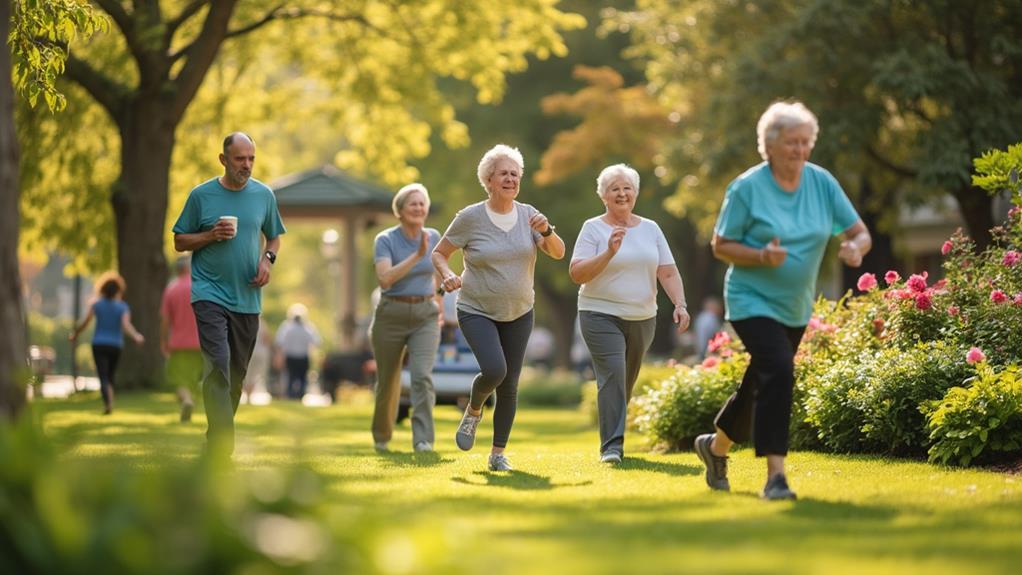
To encourage seniors to stay physically active, make exercise enjoyable by incorporating fun activities like dancing or tai chi. Integrate exercise into daily life with morning walks or stretching. Socialize through group sports or fitness classes to elevate motivation. Track progress and set rewards for reaching fitness goals to maintain momentum. Aim for at least 150 minutes of aerobic activity weekly and include muscle-strengthening and balance exercises. Always consult a doctor before starting any new regimen to guarantee safety. Uncover further tips for keeping seniors active and maintaining their comprehensive health.
Make Exercise Enjoyable
With regard to encouraging seniors to stay active, making exercise enjoyable is crucial. You can start by incorporating fun activities like dance or group sports, which can greatly improve enjoyment and motivation. When exercise feels more like a pleasurable experience rather than a chore, staying active becomes much easier.
Engage in a variety of physical activities to keep workouts interesting and prevent burnout. Consider incorporating endurance, strength, balance, and flexibility exercises into your routine. Experimenting with new activities like tai chi or swimming can maintain interest and promote a sense of adventure in your physical fitness expedition.
Creating a personalized exercise routine that includes enjoyable workouts tailored to your interests can lead to greater adherence and satisfaction. Utilizing resources such as infographics or community classes can provide fresh ideas and inspiration, ensuring you always have new, engaging exercises to try.
Group activities offer social interaction, making the experience more enjoyable and providing extra health benefits. Social connections can elevate your mood and motivation, further encouraging you to stay active. By focusing on enjoyable physical activities, you'll find it easier to maintain an active and healthy lifestyle.
Integrate Exercise Into Daily Life
Starting your day with a morning walk or stretching routine can improve consistency and set a positive tone. For older adults, integrating exercise into your daily life is essential to stay active and maintain good health. You don't need to carve out large chunks of time for physical activity. Instead, incorporate exercise into your daily tasks. For instance, gardening, walking the dog, or even doing household chores can become opportunities to move more.
Break your exercise into shorter 10-minute sessions throughout the day. This approach can make it more manageable and still help you reach the recommended 150 minutes of weekly activity. Gradually increasing the duration and intensity of these activities will improve your fitness without overwhelming you.
Look for simple ways to stay active: take the stairs instead of the elevator, or park farther away from store entrances. These small changes can add up and make a big difference in your general activity levels. By seamlessly integrating physical activity into your daily routine, you'll find it easier to stay consistent and reap the health benefits that come with staying active.
Exercise at Work
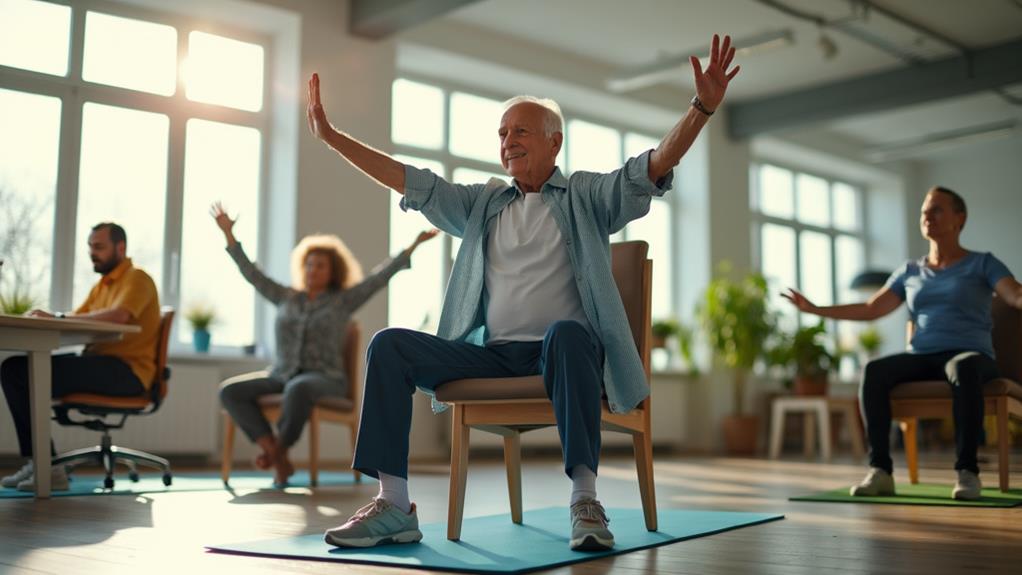
Staying active at work is essential for seniors who want to maintain their health and energy levels. You can improve your physical activity by taking the stairs instead of the elevator. This simple change increases your daily movement and burns more calories. Another effective strategy is organizing walking meetings. Rather than sitting in a conference room, suggest a stroll while you discuss work matters. This blends exercise with social interaction, making it a more enjoyable and productive experience.
Consider walking over to a colleague's desk instead of sending an email for quick communications. This small habit encourages regular movement throughout your day, helping you stay physically active. Parking farther from the office is another practical tip. This adds extra walking time to your routine, promoting a more active start and end to your workday.
Participating in workplace fitness programs or classes can also provide structured opportunities for exercise. Many workplaces offer these programs to foster a supportive community environment. By engaging in these activities, you can maintain your fitness levels and connect with coworkers who share similar health goals.
Incorporating these strategies can greatly improve your workplace fitness and general well-being.
Socialize Through Exercise
Engaging in physical activities with others greatly improves both your motivation and enjoyment. Exercising with friends or joining group classes notably increases accountability, making your fitness routine more engaging. By participating in community fitness events or clubs, you can foster social interactions, stay active, and build meaningful relationships.
Transform family gatherings into opportunities for active games or sports. This not only promotes fun but also encourages physical engagement among your relatives. Partnering with a friend for regular exercise sessions can elevate your motivation and create a reliable support system, guaranteeing you stick to your fitness goals.
Don't underestimate the power of social media. Sharing your fitness achievements and goals online can create a supportive network that keeps you motivated. Celebrating milestones with your virtual community can make a substantial difference in maintaining an active lifestyle.
The key is to find activities that you enjoy and can share with others. Regardless of it's a morning walk with a neighbor, a dance class at the local community center, or a friendly game of tennis with a coworker, staying active becomes much more enjoyable when you have company. This social aspect of exercise guarantees that you remain committed and consistent.
Track Progress and Rewards

Tracking progress and rewarding yourself can make a world of difference in maintaining an active lifestyle. By establishing personalized activity plans, you set clear fitness goals and can easily track progress over time. This makes it simpler to celebrate your improvements and stay motivated. Monitoring your progress monthly allows you to see how far you've come and make necessary adjustments to your exercise regimen based on your evolving personal goals and fitness levels.
To keep yourself motivated, consider setting specific rewards for reaching fitness milestones. Enjoying a favorite activity or treating yourself to something special can serve as powerful incentives to stick with your plan. Using fitness trackers or journals to log your exercise sessions helps you stay accountable and offers a visual representation of your progress, which can be particularly encouraging.
Regularly reassessing and adjusting your fitness goals is crucial to staying engaged. This guarantees that your activity plans remain aligned with your interests and physical capabilities. By doing so, you'll maintain a sense of achievement and continue to be motivated to pursue an active lifestyle. Remember, tracking progress and rewarding yourself isn't just a tool—it's a key strategy in achieving long-term fitness success.
Aim for Aerobic Activity
You should aim for aerobic activity to improve your cardiovascular health and general well-being. The CDC recommends that older adults get at least 150 minutes of moderate-intensity aerobic activity each week. Engaging in enjoyable activities like brisk walking, swimming, or dancing can help you meet this goal while having fun.
Starting with just 5 minutes of aerobic activity can yield health benefits, and you should gradually increase the duration as your fitness improves. Aerobic activities not only enhance your endurance but also reduce the risk of chronic diseases such as heart disease and diabetes. By staying physically active, you're taking proactive steps to manage and prevent different health conditions.
Safety is vital, so monitor for any adverse symptoms like shortness of breath or chest pain during your workouts. If you experience any of these signs, stop the activity and consult your doctor. Remember, it's important to stay physically active to maintain your health and independence. Aim for consistent aerobic activity, and soon you'll notice improvements in your overall well-being and quality of life.
Muscle-Strengthening Activities
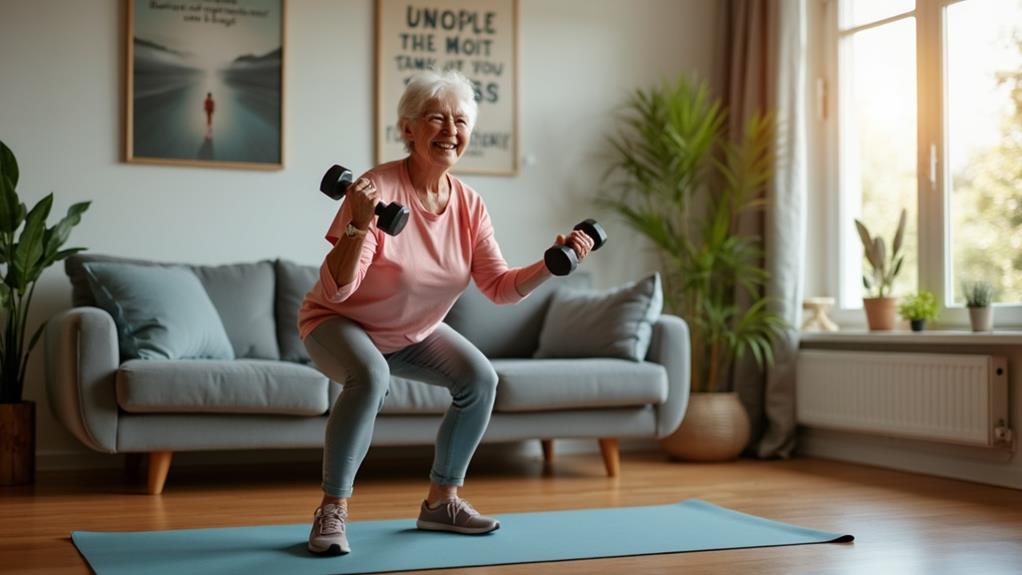
While aerobic activities are fundamental for cardiovascular health, incorporating muscle-strengthening exercises into your routine is also significant. For seniors, these exercises are important because they improve general fitness and support bone density, reducing the risk of osteoporosis. Aim to perform muscle-strengthening activities at least twice a week to reap the benefits.
Effective muscle-strengthening exercises include bodyweight movements like squats and lunges. You can also use resistance bands or hand weights to build strength safely. Consistently engaging in these routines helps improve muscle mass and functional abilities, which are crucial for maintaining independence in daily activities. Remember, it's important to avoid holding your breath during these exercises to maintain safe blood pressure levels and guarantee proper oxygen flow.
If you're just starting out, begin with light weights or even household items. Gradually increase resistance as your strength improves to prevent injury and elevate your confidence. By staying active and incorporating these exercises into your weekly routine, you'll not only improve your general health but also enrich your quality of life. So, get moving and stay strong!
Balance Exercises
Balance exercises are vital for seniors, as they play a major role in reducing the risk of falls, a leading cause of injury among older adults. These exercises help seniors stay safe by improving stability and coordination, which are fundamental for maintaining mobility. Simple activities like standing on one foot or heel-to-toe walking can make a big difference. You don't need to spend hours; practicing balance exercises for just 10-15 minutes a few times a week can yield noticeable improvements in strength and stability.
Incorporating tai chi and yoga into your routine is another excellent way to improve balance and flexibility. These forms of exercise not only contribute to better physical function but also promote mental well-being. When starting out, use support like a chair or a wall to help you perform these activities safely. This support can elevate your confidence as you build your balancing skills.
Consult With a Doctor

Integrating balance exercises into your routine can greatly improve stability and reduce fall risks, but it's just as vital to consult with a doctor before starting any new exercise regimen. Your doctor can provide personalized recommendations tailored to your health conditions and physical abilities. It's fundamental to discuss any existing health conditions or medications that might affect your ability to engage in physical activity. This guarantees you're taking a safe approach to exercise.
Doctors can offer valuable guidance on the senior-related benefits of staying active, helping you understand how physical activity positively impacts mobility, mental health, and general well-being. They can suggest specific exercises to improve strength, balance, and flexibility, which are pivotal for reducing fall risk and enhancing daily functioning.
Regular check-ins with your doctor are significant to monitor progress and make necessary adjustments to your exercise plan. This promotes sustained engagement in physical activity, making sure you reap the maximum benefits. So, don't skip this step; consult with a doctor to create a safe, effective exercise plan that aligns with your unique health needs and helps you stay active and lively.