Top 10 Exercises for Seniors to Maintain Mobility
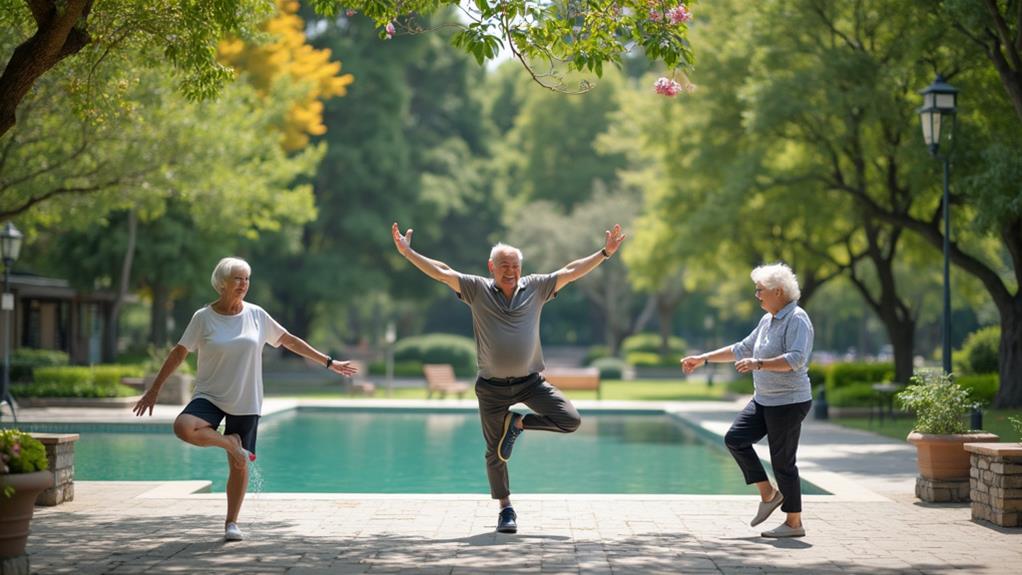
Maintaining mobility as a senior is crucial for keeping an active, independent lifestyle. Start with simple exercises like Cactus Arms to improve shoulder mobility and Bird Dog to strengthen your core. Incorporate the Chair Pose for stability and Side-to-Side Squats for lateral strength. Don't forget to stretch with the Quadriceps Stretch to keep your knees healthy. Mind-Body Walks help connect your movements with mindfulness. Always guarantee a safe environment, use a sturdy chair for support, and listen to your body. Keep consistent with your exercise routine and celebrate small achievements. There's much more to investigate about these beneficial exercises!
Understanding Mobility
In relation to senior fitness, understanding mobility is fundamental for maintaining an active and independent lifestyle. Mobility involves both joint mobility and total-body movement, which assist you in performing daily activities with ease and reduce the risk of pain and injury. Healthy joints are critical for better mobility, as they allow for improved coordination among multiple body parts during physical activities.
Key elements that improve mobility include flexibility, core strength, stability, and posture. For instance, maintaining good posture helps align your body correctly, reducing strain on your muscles and joints. Flexibility exercises keep your muscles limber, making it easier to move freely. Core strength is important for stability, helping you maintain balance and avoid falls.
Engaging in regular mobility exercises can greatly enhance your quality of life. By promoting independence, these exercises help you remain self-sufficient and active. They also reduce the likelihood of developing chronic conditions such as arthritis or osteoporosis, which can severely impact your mobility.
Understanding mobility allows you to make informed exercise choices that target specific areas, ensuring you maintain your physical capabilities as you get older. This proactive approach not only improves your mobility but also supports your overall health and well-being.
Preparing for Mobility Exercises
Before diving into mobility exercises, ensuring a safe and comfortable environment is essential. Begin by clearing an open floor space to move freely without tripping hazards. Lay down a mat to cushion your joints, and make sure the area is well-lit.
Next, consult a doctor, especially if you have chronic conditions or prior injuries. A medical professional can provide guidance tailored to your needs, preventing further mobility problems.
Safety considerations are paramount. Use a sturdy chair for support during exercises. This can help maintain balance and reduce the risk of falls. If any exercise feels too challenging, don't hesitate to make modifications based on your capabilities.
Your personal preference and fitness level will dictate if you spread these exercises over the week or complete them in one session. Listening to your body is key to avoiding strain.
Cactus Arms
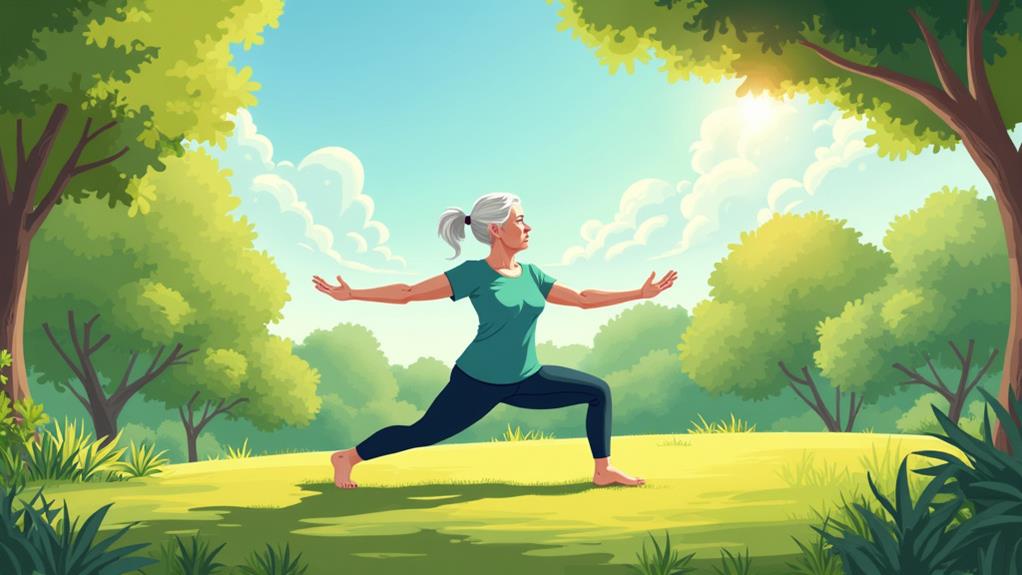
Once you've set up a safe environment and consulted your doctor, it's time to examine exercises like Cactus Arms. This mobility exercise is perfect for seniors looking to improve shoulder mobility and maintain good posture. Start by standing with your feet hip-width apart. Reach your arms overhead, then open them wide to mimic a cactus shape. This movement, performed for 8 to 10 repetitions, engages your upper body and improves flexibility.
If standing is challenging, try the seated modification. Sit upright in a sturdy chair, ensuring you maintain good posture throughout the exercise. Regardless of standing or seated, focus on breath awareness. Inhale deeply as you reach your arms overhead, and exhale slowly while opening them. This coordination of breath and movement not only enhances your flexibility but also promotes relaxation.
Cactus Arms are particularly effective in alleviating shoulder stiffness, a common issue among seniors. By incorporating this exercise into your routine, you'll increase your shoulder mobility and reduce the risk of injury in daily activities. Remember, consistency is key. Performing Cactus Arms regularly will help you maintain better mobility and improve your general well-being.
Cactus Arms Open and Close
To further advance shoulder mobility and flexibility, try incorporating the Cactus Arms Open and Close exercise. Start by standing with your feet shoulder-width apart and your arms in a cactus position, with your elbows bent at 90 degrees. Inhale as you bring your arms together in front of you, rounding your back gently. Then, exhale as you open your arms wide, expanding your chest. Aim for 8 to 10 repetitions to optimize the benefits.
If rounding your back feels uncomfortable or unsafe, keep your torso still and focus on arm movement. This exercise can also be done seated to provide extra stability while still engaging the upper body and core. Consistent practice not only improves shoulder mobility and flexibility but also enhances posture, which is vital for seniors.
Tips for Success:
- Stand tall: Maintain good posture throughout the exercise.
- Engage your core: Keep your abdominal muscles active to support your upper body.
- Move slowly: Focus on controlled movements to optimize effectiveness.
- Stay consistent: Regular practice will yield the best results for mobility and flexibility.
Incorporating the Cactus Arms Open and Close exercise into your routine can make a significant difference in your upper body mobility and general well-being.
Bird Dog
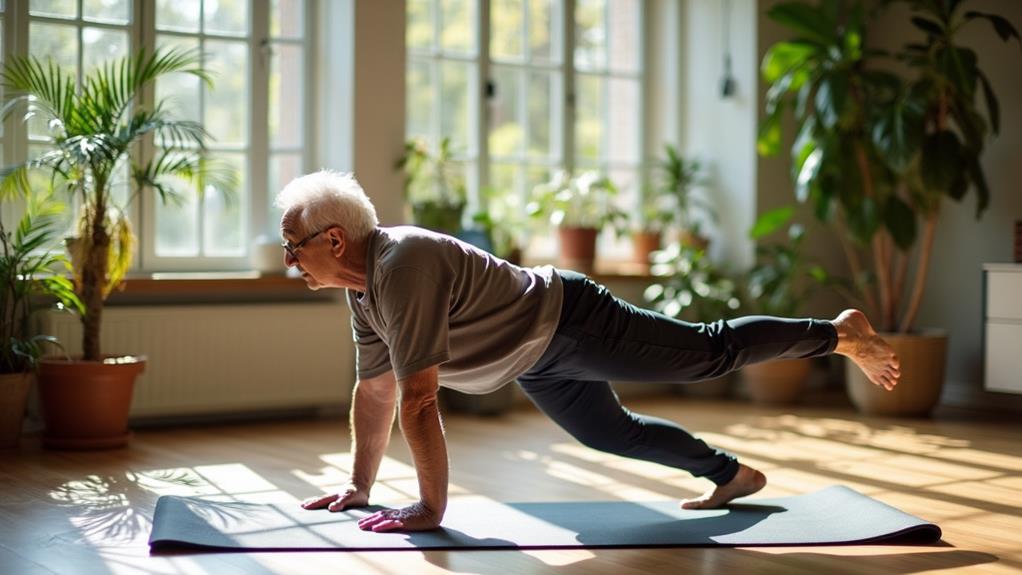
For a well-rounded exercise that improves both strength and coordination, try the Bird Dog. This exercise is perfect for seniors looking to maintain mobility and enhance core strength. To start, get on all fours. Engage your abdominal muscles, then extend one arm and the opposite leg simultaneously. This movement increases spinal stability and coordination.
Focus on maintaining a neutral spine and proper alignment throughout the exercise. This helps prevent strain and guarantees you're maximizing its benefits. Perform the Bird Dog for 8 to 10 repetitions on each side. It's a manageable supplement to any exercise routine, and you'll notice improvements in balance and general body awareness.
If you're concerned about balance, you can modify the Bird Dog by extending only one leg while keeping both hands on the floor. This safer option still provides significant benefits without compromising stability. The Bird Dog is excellent for improving functional movement, which is vital for daily activities.
Incorporating the Bird Dog into your routine strengthens your core, improves balance, and supports spinal stability. It's a fantastic way to stay active and maintain your mobility as you grow older. So, include this exercise in your routine and feel the difference it makes!
Chair Pose
The Chair Pose, also known as Utkatasana, is a powerful exercise that strengthens your thighs, calves, and spine while improving balance and stability. For seniors, it's especially beneficial as it helps enhance mobility and reduces the risk of falls. To perform the Chair Pose, stand with your feet hip-width apart and bend your knees as if you're sitting back into an imaginary chair. Hold this position for 15-30 seconds while keeping your chest lifted.
This pose can be modified by using a chair for support, allowing you to engage in the exercise safely without straining your knees or lower back. Regular practice of the Chair Pose will improve your core strength, vital for maintaining mobility. Be sure to focus on your breathing—inhaling deeply as you prepare to lower into the pose and exhaling as you hold the position. This fosters mindfulness and body awareness.
Here are some tips to help you enjoy the benefits of the Chair Pose:
- Use a chair for support: It's okay to hold onto a chair to maintain your balance and support your knees.
- Focus on breathing: Deep, mindful breathing promotes relaxation and focus.
- Engage your core: Tighten your abdominal muscles for added stability.
- Keep your spine straight: Maintain a lifted chest to avoid straining your lower back.
Side-to-Side Squat

Side-to-side squats are a fantastic way to improve your lateral strength and stability, vital for daily activities like walking and turning. This functional exercise targets your quadriceps, hamstrings, glutes, and inner thighs, promoting comprehensive lower body strength which is fundamental for maintaining mobility in seniors.
To perform a side-to-side squat, start by standing with your feet shoulder-width apart. Shift your weight to one side while bending that knee, keeping the other leg straight. Return to the starting position, then switch sides. Maintaining proper form is important: keep your chest up, and make sure your knees are aligned over your toes to prevent injuries and optimize the benefits of the exercise.
Incorporating side-to-side squats into your exercise routine can greatly improve your balance, coordination, and functional mobility. By strengthening your lower body, you're not only maintaining mobility but also reducing the risk of falls, which is a common concern among older adults. This exercise is a powerful tool to help seniors stay active and independent, ensuring you can continue to enjoy your daily activities with confidence and ease.
Mind-Body Walk
After strengthening your lower body with side-to-side squats, you can further improve your general well-being with a Mind-Body Walk. This mindful walking exercise encourages seniors to focus on slow, deliberate movements to elevate body awareness and posture. Aim to walk for 10 to 15 minutes, either indoors or outdoors, while maintaining a natural arm swing and steady breathing. Pay close attention to your foot placement and weight shifts to improve balance and coordination.
Shorter walks, lasting 2-3 minutes, can also be effective for increasing mindfulness and mobility awareness. This exercise not only promotes physical activity but also contributes to mental well-being by fostering a connection between the mind and body. As you walk, try to stay present and mindful of each step, feeling the ground beneath your feet and the rhythm of your breathing.
Here are some tips for enjoying your Mind-Body Walk:
- Find a quiet, safe environment: Choose a location where you can walk without distractions.
- Wear comfortable shoes: Proper footwear supports better posture and balance.
- Focus on your breath: Steady breathing helps maintain focus and calmness.
- Listen to your body: Adjust your pace to what feels comfortable and safe.
Quadriceps Stretch
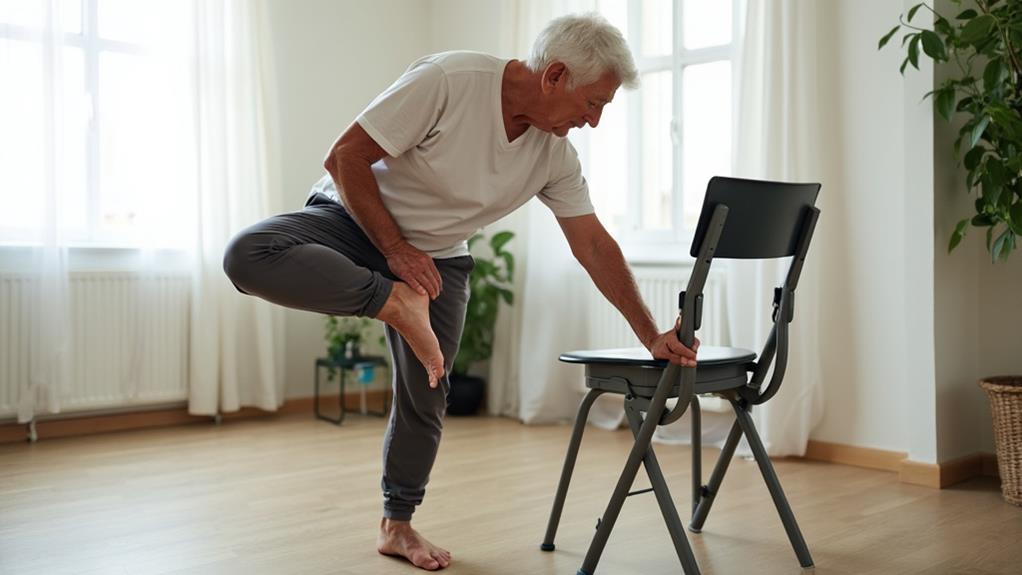
Engaging in a quadriceps stretch is essential for maintaining knee joint health and stability, especially important for activities like walking and biking. To perform the quadriceps stretch, stand tall and hold onto a chair for balance. Gently pull one foot towards your glutes, keeping your knees together. This position helps elongate the quadriceps muscles effectively.
Hold the stretch for 30 seconds on each leg. This duration guarantees proper muscle elongation and contributes to maintaining the health and stability of the knee joint. Regularly incorporating this stretch into your routine can greatly improve overall balance and mobility for seniors, reducing the risk of falls.
If standing is challenging, you can modify the quadriceps stretch for comfort by performing it seated. Sit on a chair and extend one leg back, aiming to touch your heel to your glutes. This seated version still offers the benefits of the stretch without compromising safety.
Consistency in Exercise
Sticking to a regular exercise routine is essential for seniors to reap long-term health benefits. Consistency in exercise promotes improved mobility, strength, and balance, which are critical for enhancing your quality of life. Engaging in regular exercise, even small, manageable workouts, greatly increases flexibility and endurance. This helps you maintain mobility and general fitness as you grow older.
When you establish a consistent routine, it fosters accountability and progress, making it easier to stick with your exercise program over time. Research shows that seniors who maintain a regular exercise regimen experience lower rates of chronic diseases and improved mental health. Exercise helps not only your body but also your mind, keeping you mentally sharp and positive.
To stay motivated, celebrate small achievements in your exercise path. These milestones can reinforce a positive attitude toward physical activity and keep you committed to your fitness goals. Here are a few tips to help you enjoy and stick to your routine:
- Set realistic goals: Start small and gradually increase intensity.
- Mix it up: Include strength training, balance exercises, and flexibility workouts.
- Find a buddy: Exercise with a friend for added motivation.
- Track your progress: Use a journal or app to monitor improvements.
Consistency is key to maintaining mobility and enjoying a healthier, more active life.