How to Help Seniors Transition Into Nursing Homes

Helping seniors move into nursing homes requires careful planning, empathy, and active involvement. Include your loved one in discussions and touring facilities to respect their preferences. Set up their new space with familiar, cherished items to create a sense of security. Maintain consistent communication and frequent visits to ease their emotional adjustment. Encourage social engagement through group activities and shared meals to prevent feelings of isolation. Regular interaction with staff to monitor care and inclusion in decision-making improves comfort. By following these steps, you'll find more ways to support a smooth and caring move for your loved one.
Choosing the Right Nursing Home
Selecting the right nursing home for a loved one can feel like navigating through a maze, but it's an indispensable step to guarantee their well-being. Start by conducting thorough research on different nursing homes. Utilize online resources and visit multiple facilities to compare environments, staff interactions, and available services. Engaging directly with the staff and administrators is fundamental. You'll want to understand their policies, care options, and activities offered to confirm the facility aligns with the senior's needs and preferences.
Assess the staff's qualifications and their approach to providing skilled nursing care. A positive and welcoming atmosphere can greatly impact your loved one's comfort and general living situation. Pay attention to the quality and assortment of meals provided, as nutrition plays a crucial role in their health.
Evaluate the range of activities available to keep seniors engaged and stimulated. A fulfilling lifestyle involves more than just basic care; it includes opportunities for social interaction and mental enrichment. Utilize facility comparison tools to assess significant factors like resident rights, staff qualifications, and satisfaction ratings from current residents and families. This all-encompassing approach will help guarantee a smooth change and a positive living experience for your loved one.
Involving Seniors in Decisions
Involving seniors in decisions about their change to a nursing home is vital for their emotional well-being and sense of autonomy. When you include them in the decision-making process, it helps alleviate feelings of powerlessness and allows them to voice their preferences about care options and living arrangements.
Start by involving seniors in discussions about potential nursing homes. Encourage them to investigate different care options and take facility tours, so they can assess the environment and interact with the staff. This involvement provides a sense of control and ownership over their change.
Encouraging them to weigh the pros and cons of different facilities is important. This guarantees that the choice aligns with their personal needs and lifestyle. By integrating their input into the final decision, you can greatly enhance their emotional well-being and satisfaction with the change.
- Empower them to express preferences
- Alleviate feelings of powerlessness
- Enhance comfort through facility tours
- Align choices with personal needs
- Enhance emotional well-being
Ultimately, the key is to make certain that seniors feel heard and respected throughout this notable life change. Their active involvement is vital for a smoother, more positive change.
Maintaining Family Connections
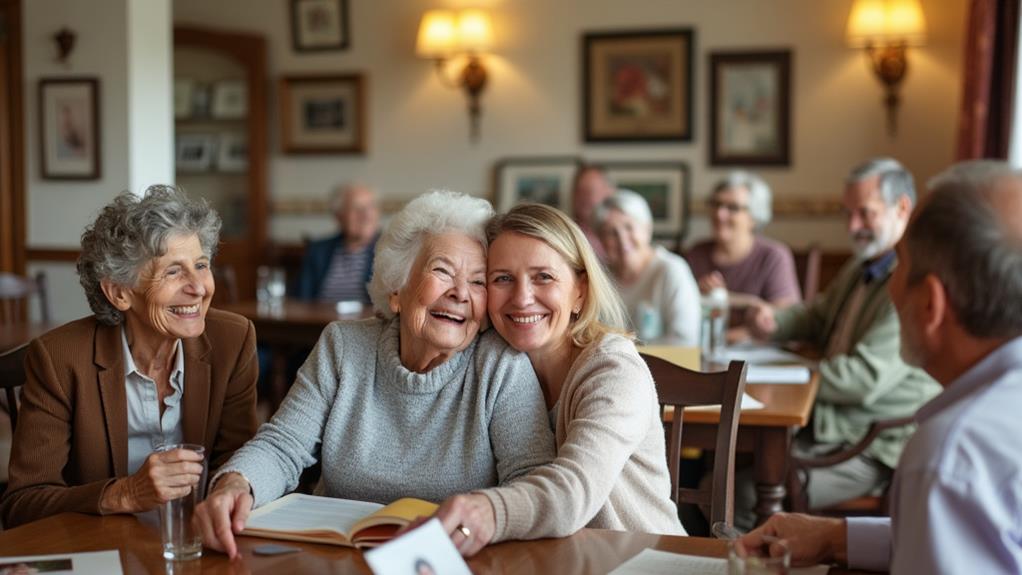
Maintaining family connections is fundamental for seniors moving into nursing homes. Frequent visits from family and friends can greatly reduce feelings of isolation and help your loved one adjust to their new environment. By establishing a reliable visitation schedule, you provide stability and reinforce the importance of maintaining family ties for their emotional support.
Regular contact is also important for monitoring care and well-being. When you visit often, you can guarantee that your family member is receiving the proper attention and that their needs are being met. It reassures them that they haven't been forgotten and that you're actively involved in their life.
Open communication with the nursing home staff is critical. If you notice policies that limit visitation, it could be a red flag regarding the quality of care. Don't hesitate to advocate for more frequent visits and better communication channels to maintain those fundamental connections.
Organizing family meetings can help coordinate visits and guarantee that everyone is involved in providing a strong support system. This collective effort will make the shift into a nursing home smoother and more comfortable for your loved one, showing them they're surrounded by care and concern.
Encouraging Social Engagement
Encouraging social engagement in nursing homes is vital for seniors' emotional and mental well-being. By taking part in dining and group activities, seniors can improve their social interactions and general happiness. You can play an important role in helping seniors by accompanying them on initial outings or group activities, which can ease their anxiety and foster a sense of belonging in their new community.
Here are some ways you can help:
- Join them for meals: Sharing a meal can be a comforting way to encourage social engagement.
- Participate in group activities together: This can help seniors feel less anxious during the adjustment period.
- Encourage community activities: These activities allow seniors to investigate their interests and rediscover a sense of purpose.
- Help them find common interests: Facilitating connections through shared hobbies can make senior living feel more like home.
- Support them in building friendships: Early involvement can prevent isolation and improve their quality of life.
Helping seniors engage themselves in community activities can greatly improve their sense of self and purpose. By encouraging prompt participation, you can help make the shift smoother, making the nursing home feel more like a true community.
Personalizing the Living Space

Creating a sense of community through social engagement is just one part of making a nursing home feel like home. Personalizing the living space with cherished items plays a significant role in this change. By bringing family photos, favorite blankets, and personal decorations, you can create a familiar atmosphere that promotes emotional well-being. These personal belongings can help alleviate feelings of anxiety and loneliness, making the new environment more comforting.
Involving seniors in the selection of items to bring is fundamental. This process allows them to express their preferences and maintain a sense of identity. When seniors have a say in their living space, they feel a sense of control, which is crucial for their emotional adjustment. Research shows that having personal care items and familiar possessions improves satisfaction with their new living situation, contributing to an overall better quality of life.
Advocate for the inclusion of these personal items in their nursing home. By doing so, you'll help guarantee that their needs and preferences are met, making the change smoother. A well-personalized living space can make a significant difference in how seniors adapt to their new home.
Providing Emotional Support
While moving into a nursing home, seniors often face emotional challenges that can make the adjustment period difficult. Providing emotional support is vital to help ease this change and guarantee they feel like home in their new environment. Here are some effective ways to offer that support:
- Personalize their space: Encourage seniors to bring cherished items from home. Familiar surroundings can greatly reduce anxiety and make the new place feel more welcoming.
- Regular family visits: Weekly phone calls, occasional shared meals, and frequent visits from family members can alleviate feelings of loneliness and keep a strong support network intact.
- Engage in community activities: Motivate seniors to participate in social and recreational activities. These interactions can enhance their morale and improve mental health by fostering new friendships and a sense of community.
- Frequent check-ins: Regularly monitor their emotional well-being through open communication. Identifying signs of loneliness or depression early allows for timely intervention.
- Create a supportive environment: Build a network of caregivers and peers who can provide companionship and understanding, making the change smoother and more comforting.